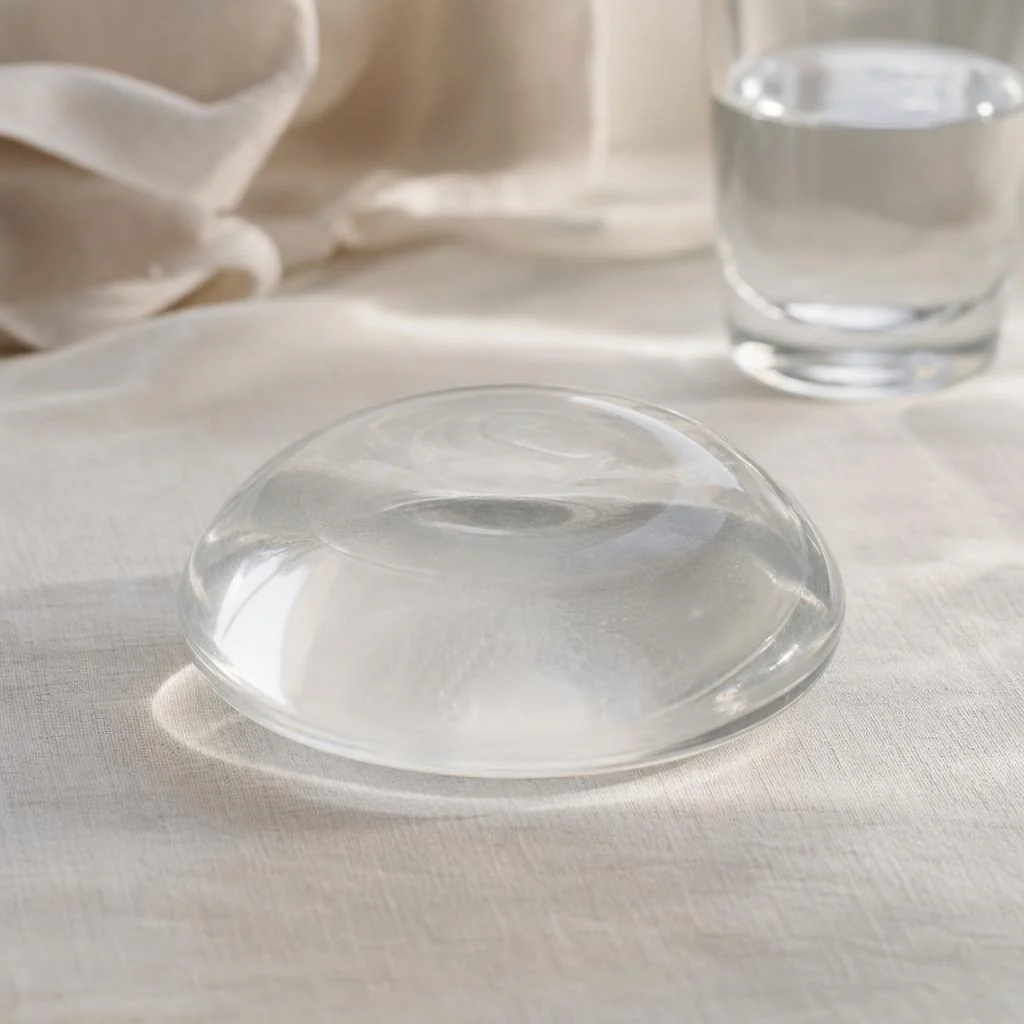

A smaller procedure can make a noticeable difference when it addresses the feature that concerns you. Chin augmentation, an upper lip lift, buccal fat removal, fat injection, chemical peeling and eyelid surgery deserve a place in that conversation.
These procedures may be considered in an office setting with local anesthesia, sometimes with sedation. The right setting and anesthesia depend on the operation and the patient. “Small” does not mean risk-free.
1. Chin augmentation
A chin implant can be performed on its own or with another procedure, such as a facelift or rhinoplasty. The aim is balance: improving projection where a chin is naturally small or has lost definition.
Implants come in different shapes. The choice depends on your proportions and the contour we are trying to achieve. A chin implant changes the chin; it should not be described as a guaranteed correction for every neck or jowl concern.
2. Upper lip lift
The skin between the base of the nose and the red part of the upper lip may lengthen with age, although a long upper lip can also be inherited. At the same time, the red lip can lose volume.
Shortening the upper lip and adding volume are different goals. A lip lift addresses length; filler or fat may be considered for volume. They are sometimes combined. The plan should account for your proportions, tooth show and the scar associated with surgery.
3. Buccal fat removal
The buccal fat pads contribute to fullness in the cheeks. In selected patients, removing some of this fat through an incision inside the mouth can create a more defined contour.
Selection matters. The goal is not simply to make every round face thinner. We should consider existing volume, the changes expected with aging and the possibility of an overly hollow result, as well as the risks of surgery.
4. Fat injection
Fat can be taken from another part of your body and transferred to areas of the face where additional volume is wanted, including the cheeks, chin or lips.
Not all transferred fat survives. The amount retained varies, and another treatment may be needed. Surviving fat may provide lasting volume, but the face continues to age and change. A consultation should compare the benefits, limitations and costs of fat transfer with those of fillers rather than promise a permanent, less expensive result.
5. Chemical peeling
Chemical peeling can be considered for selected lines and changes in skin texture. The type and depth of peel must suit your skin and the area being treated.
A TCA peel is one option discussed in my practice. Healing, redness and pigment changes need to be part of the conversation. Skin tone alone is not a complete treatment plan, and a single downtime estimate does not fit every peel.
6. Upper or lower eyelid surgery
Extra upper eyelid skin can create a hooded appearance. An upper eyelid procedure may remove excess skin and, where appropriate, address fat. The aim is a more open appearance while respecting eyelid function.
Lower eyelid bags and hollows present a different problem. Depending on the assessment, surgery may reposition fat, remove selected fat or address excess skin. Upper and lower eyelid operations are not interchangeable.
Choosing a focused procedure
These procedures can have long-lasting effects, but healing and aging continue. At consultation, ask about the proposed technique, the risks, visible recovery, return to work and exercise, and whether additional treatment may be needed. The best smaller procedure is the one suited to your anatomy and goals—not the one with the shortest advertised recovery.
Sources and further reading
- American Society of Plastic Surgeons: Eyelid Surgery Results
- American Society of Plastic Surgeons: Chemical Peel Recovery
- ASPS: Facial Rejuvenation Through Fat Grafting
General information, not a substitute for an individual assessment. Your surgical team will provide instructions for your procedure and recovery.