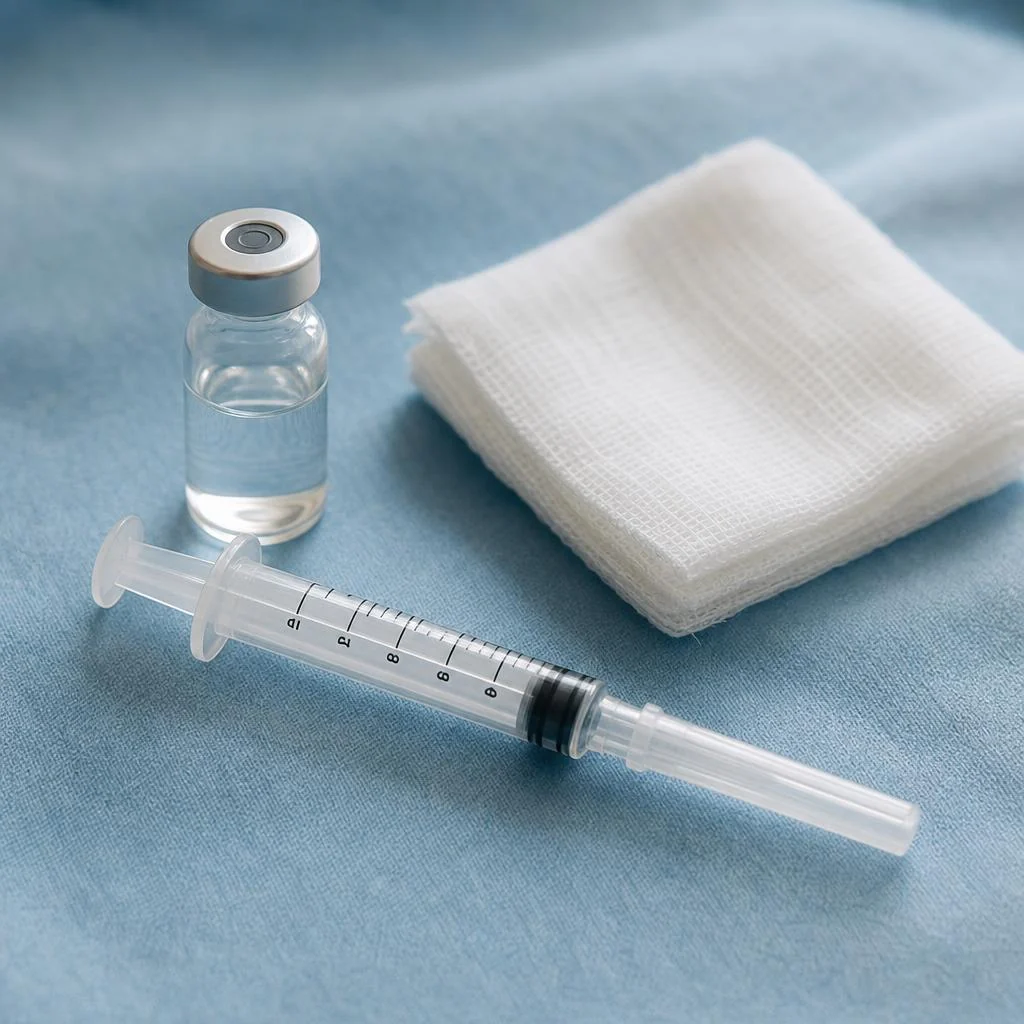
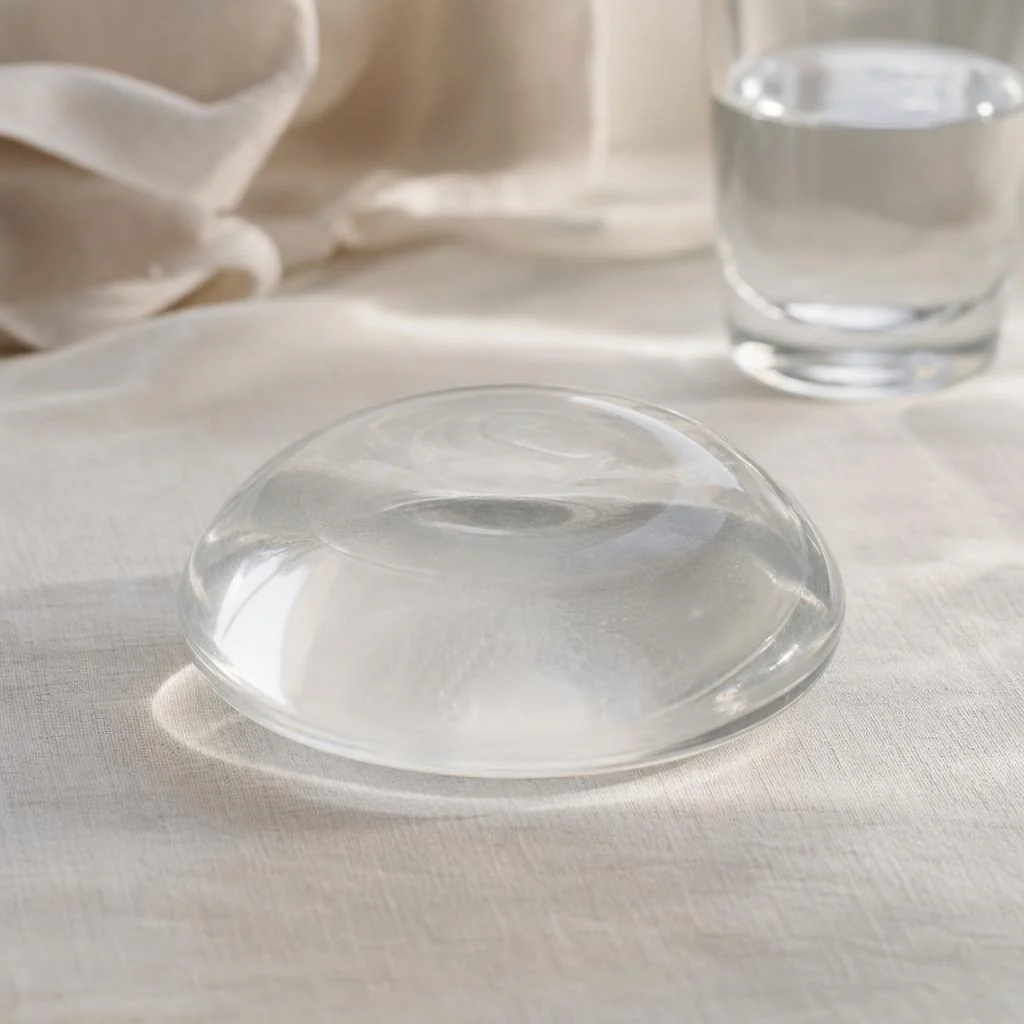
Breast augmentation is not simply a question of choosing a cup size. The implant, the proportions of the breast and the balance between the chest and hips all matter.
I use smooth-shell silicone gel and saline implants, although I prefer saline. That is my clinical preference, not a claim that one implant is right for everyone.
Saline implants have a silicone outer shell filled with sterile saltwater. They do not contain a silicone gel filling. For patients considering their options, several practical differences are worth discussing.
A change in size can reveal a deflation
When a saline implant leaks, the breast generally loses size or changes shape as the implant deflates. This is different from the silent rupture that can occur with silicone gel implants. A suspected deflation still needs a clinical assessment. This distinction does not mean you can stop routine breast screening or ignore a new breast symptom.
There is no silicone gel filling to leak
This is one reason for my preference. It does not mean that saline implants are silicone-free or free of implant-related risks.
An implant filled during surgery can be inserted before inflation
With this type of saline implant, I place the implant in the breast pocket and then fill it. The fill volume can be adjusted during the operation within the device’s specified range. The choice of implant and the surgical plan remain individual.
The goal is a fuller breast in proportion to your frame
Augmentation can add volume and improve the balance between the breasts and hips. If there is significant sagging, we should discuss whether a breast lift is also needed. An implant is not a substitute for every lift.
Incisions, recovery and ongoing care
The incision and recovery plan are part of the consultation. An incision at the margin of the areola is one approach I use; every incision leaves a scar, and the best approach depends on the patient. Return to work depends on the operation, healing and the demands of your job.
Both saline and silicone gel implants have risks, including capsular contracture, infection, rupture or deflation, and the possibility of further surgery. Breast implants are not lifetime devices. We should discuss the current device information, ongoing follow-up and the trade-offs of each option before deciding what suits you.
Sources and further reading
General information, not a substitute for an individual assessment. Your surgical team will provide instructions for your procedure and recovery.