
Key Highlights
- Scars may be wide, thick, raised, depressed, or pigmented.
- Scars are also more noticeable when they fall at an unnatural angle to the skin’s natural crease lines. A depressed or elevated scar casts a shadow that further accentuates its visibility.
- Scars can be lasting reminders of a childhood injury, a fall, a prior surgery, or an accident, and the emotional weight they carry is often as real as the physical mark itself.
- Facial scars can be more noticeable in situations where camouflage isn’t an option, such as at the gym with hair pulled back, or in any setting requiring makeup-free skin.
- Scars affect how people feel in social situations, and scars on the body can affect clothing choices, from avoiding swimsuits to steering clear of shorts, crop tops, or sleeveless tops.
- Scar revision reduces visibility and, in some cases, restores lost function.
- Scars can contract over time and distort a nearby feature, such as pulling on the mouth or an eyelid, or limiting mobility of the neck or a joint.
What Is a Keloid Scar?
You may hear the term keloid in connection with scar treatment. A keloid is a raised, thickened scar that grows beyond the original wound boundary, unlike a typical scar, which stays within the edges of the original injury. Keloids can continue to grow over time and are more prone to recurrence after treatment, which is why they’re sometimes managed differently than standard scar revision, including additional steps like corticosteroid treatment alongside surgery.
When to Consider Surgery
Reasons for scar revision surgery generally fall into three categories: a scar that’s cosmetically noticeable, one that limits clothing choices, or one that restricts physical mobility. Some patients pursue scar revision for one of these reasons specifically; many find that more than one applies.
Information for Kirwan Plastic Surgery Patients
The best decisions are informed decisions. Dr. Kirwan can help you learn more about scar revision, discuss other treatment options, and provide answers tailored to your specific scar and goals. You can schedule a consultation for surgery in Norwalk with Dr. Kirwan.
Preparing for the Procedure
After choosing Dr. Kirwan, the next step is a consultation. Be prepared to discuss your goals and expectations for surgery, your medical history, any previous procedures, and whether you have a personal history of keloid scarring, since this affects the surgical plan. During your consultation, Dr. Kirwan will examine the scar directly and take photos to review with you, helping you understand the technique involved, what the resulting scar is likely to look like, and the realistic benefits of surgery. He’ll also show you examples of his own surgical results, including some of the long-term outcomes featured in the before and after gallery below.
What Happens During Surgery
Surgery is normally performed under local anesthesia. Dr. Kirwan performs the specific technique discussed and agreed upon during your consultation, tailored to the scar’s location, size, and cause.
Procedure Options
Dr. Kirwan may recommend one of several techniques depending on your specific scar:
1. Scar Excision
- Used when there are no other associated problems. This is commonly performed for a wide scar that can be reduced in size, with the resulting scar placed in a more favorable direction.
- Deep stitches are used to keep the wound supported until the scar matures.
- Plastic dressings are often used so you’re able to shower during early healing.
- Length of surgery depends on the size of the scar.
- Outcome: ideally, removal of the unsightly scar and a thin line that continues to fade over time.
2. Z-Plasty or W-Plasty
- Ideal for patients who would benefit from realigning the scar so the new scar falls into the skin’s natural creases instead of across them.
- Length of surgery varies depending on complexity.
- Outcome: ideally, removal of the unsightly scar and a thin line that continues to fade over time.
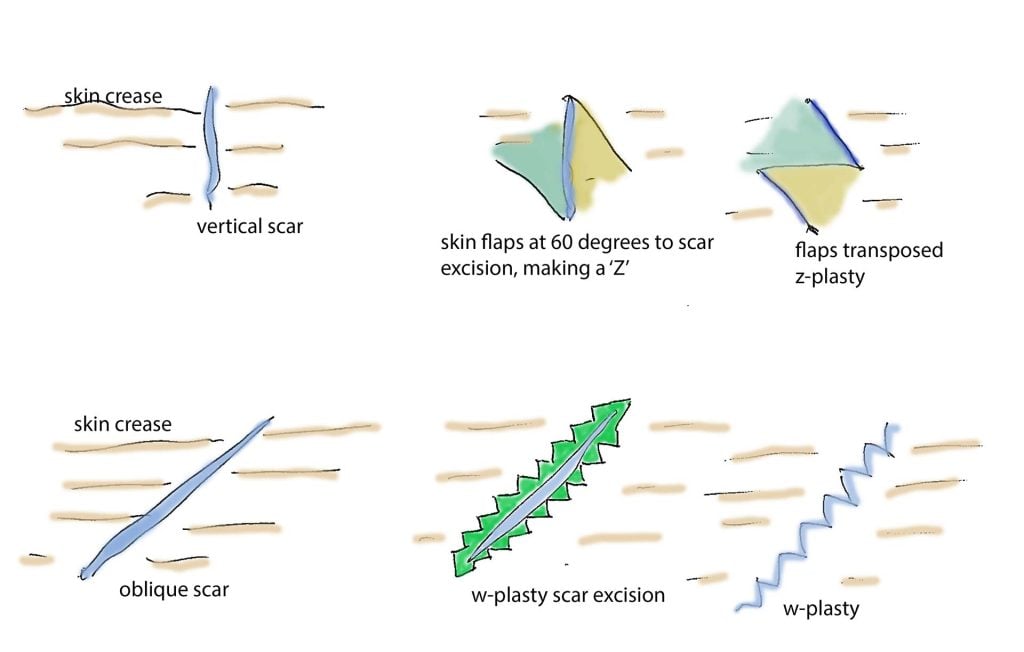
Scar Excision vs. Z-Plasty/W-Plasty: Which Fits Your Scar?
| Scar Excision | Z-Plasty / W-Plasty | |
|---|---|---|
| Best for | A wide scar with no directional problem, where reducing width is the main goal | A scar that falls at an unfavorable angle to the skin’s natural creases |
| What it changes | The scar’s width and overall visibility | The scar’s direction and shape, breaking up a straight line so it blends with natural skin folds |
| Typical candidate | Scars in an already-favorable orientation | Scars that cross joints, facial creases, or otherwise sit at an angle that draws the eye |
| Recovery | Similar for both, local anesthesia, stitches removed as the wound heals, gradual fading over months | |
| Combined use | These techniques are sometimes combined within a single revision when a scar has both a width and a directional problem | |
Results and Recovery
Full recovery and final results take time to develop. Most patients can return to work within 24 hours and resume other activities, such as working out, in approximately 3 to 4 days, depending on the specific surgery and the area treated. Contact sports should generally be avoided for 2 to 6 weeks. If the incision is traumatized during healing, it may reopen and require further treatment.
All scars appear red immediately after surgery, and this is expected. Most scars fade to a thin, white line over 6 to 18 months. Protecting the healing scar with sunblock is important during this period, since UV exposure can cause the scar to become pigmented and more visible. Dr. Kirwan recommends a sunblock and scar cream regimen to support healing, which is particularly important for patients with a history of keloid scarring.
Some bleeding is normal for the first 24 hours after surgery, along with swelling and bruising. Ice packs during the first 48 hours help reduce both. Following the specific instructions provided by Dr. Kirwan and his staff, both before and after surgery, is the best way to support a smooth recovery and the final result.
Frequently Asked Questions
How long does it take for a scar revision to fully heal?
Most patients return to work within 24 hours and resume light activity within 3 to 4 days. The scar itself continues to fade over 6 to 18 months, gradually becoming a thin white line.
What’s the difference between scar excision and Z-plasty?
Scar excision reduces a scar’s width, typically for scars already in a favorable direction. Z-plasty and W-plasty realign a scar’s direction so it falls into the skin’s natural creases, which is the better fit when a scar’s angle, not just its width, is the main concern.
What is a keloid scar, and does it change the treatment approach?
A keloid is a raised scar that grows beyond the original wound’s boundaries and can recur after treatment. If you have a history of keloid scarring, this is discussed at your consultation, since it may call for additional steps like corticosteroid treatment alongside surgery.
Will my scar revision leave another visible scar?
Any surgical incision creates a new scar, but the goal of scar revision is a thinner, better-placed, and less noticeable result than the original. Most patients see their new scar fade to a thin white line over 6 to 18 months.
How do I protect my scar while it’s healing?
Sunblock is essential during healing, since UV exposure can cause the healing scar to become pigmented. Dr. Kirwan also recommends a specific sunblock and scar cream regimen, particularly important for patients prone to keloid scarring.
Can scar revision restore lost function, not just appearance?
Yes, in some cases. Scars that have contracted and are pulling on a nearby feature, such as the mouth, an eyelid, or limiting joint mobility, can sometimes have function restored alongside the cosmetic improvement.
Ready to Discuss Your Scar?
If a scar is affecting your confidence, your clothing choices, or your mobility, the most useful next step is a consultation where Dr. Kirwan can assess your specific scar and recommend the right technique. Browse real before and after results, learn more about Dr. Kirwan’s background, or schedule a consultation to get started.
This page is for general informational purposes and does not constitute medical advice. Schedule a consultation with Dr. Kirwan to discuss the right approach for your specific scar.
SEE THE TRANSFORMATIONS & BEAUTIFUL RESULTS
Before & After Photos
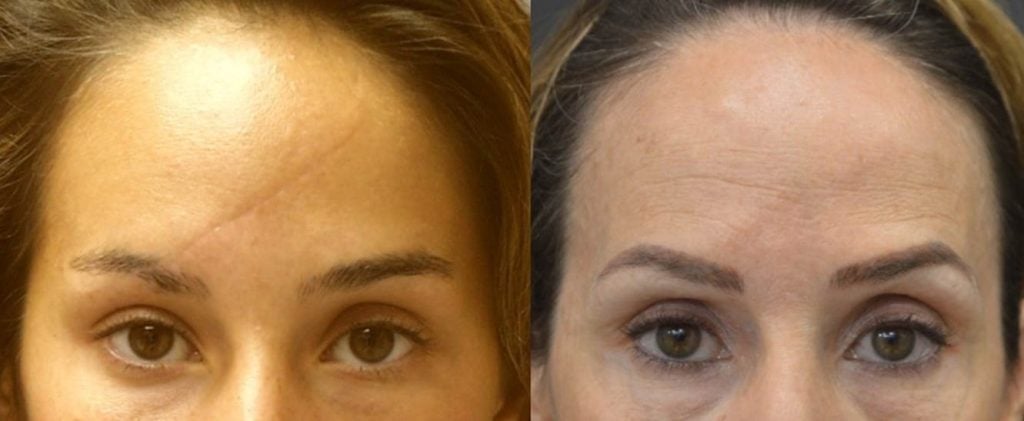
Faded scar 23 years after scar revision using ‘W’ plasty technique.
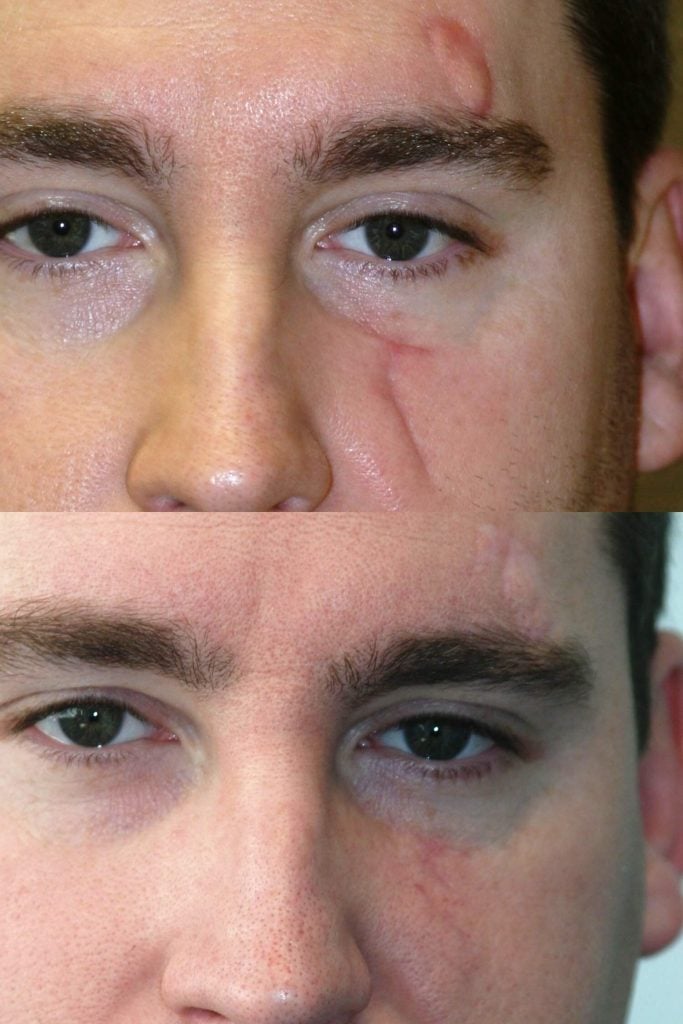
Z Plasty scar revision 6 months after surgery
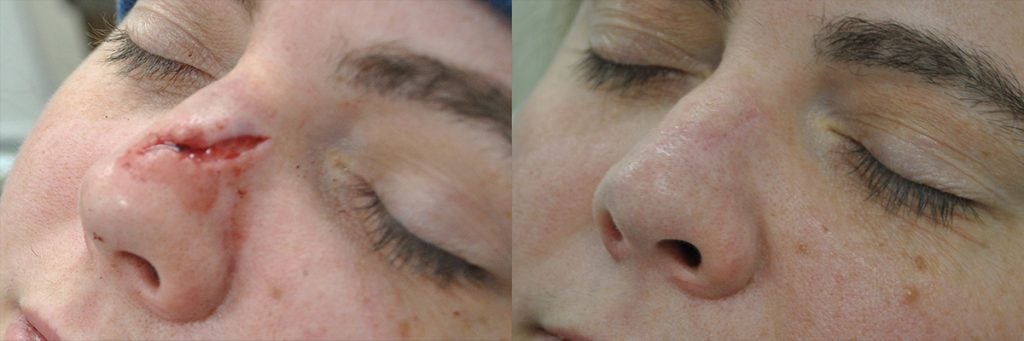
33-year-old 3 months after laceration repair of nose