

23
Jul
Combining BodyTite with Liposuction: A Layered Approach to Body Contouring in Norwalk
Patients researching body contouring options in Norwalk often assume they need to choose between a non-surgical skin-tightening treatment and traditional liposuction, when in reality, one of the most effective approaches combines both technologies within a single treatment session. BodyTite and liposuction address two related but distinct problems, excess fat and loose skin, and understanding how they work together, rather than as competing alternatives, helps patients get a clearer picture of what a layered body contouring approach can actually achieve.
Understanding What Each Treatment Does on Its Own
Traditional liposuction is a well-established surgical technique that removes unwanted fat cells from beneath the skin through a thin, hollow cannula inserted via small incisions. It is highly effective at reducing fat volume in areas like the abdomen, flanks, thighs, and upper arms, but it does not directly address skin quality or laxity. In patients with good skin elasticity, the skin naturally retracts somewhat after fat removal, but in patients with looser or more lax skin, traditional liposuction alone can sometimes leave behind loose, poorly supported skin once the underlying fat volume has been reduced.
BodyTite works differently. Using a technology called radiofrequency-assisted lipolysis, commonly abbreviated RFAL, BodyTite delivers controlled radiofrequency energy beneath the skin through a small internal probe, gently heating and melting fat while simultaneously triggering a tightening response in the skin's deeper collagen layer, the dermis. This dual action, addressing both fat and skin tightening at the same time, is what makes BodyTite fundamentally different from either traditional liposuction alone or purely external, non-invasive skin-tightening devices.
Why Combining the Two Makes Sense
Dr. Laurence Kirwan's approach at his Norwalk practice often involves using BodyTite's radiofrequency energy to first pre-melt fat in a targeted area, followed by traditional suction-assisted liposuction to remove the now-liquefied fat more gently and efficiently than liposuction performed on unheated tissue. This sequencing, sometimes described as BodyTite followed by liposuction, is associated with a notably smoother removal process, since pre-melted fat requires less mechanical force to extract, which in turn tends to reduce trauma to the surrounding tissue, bruising, and post-procedure discomfort compared to traditional liposuction performed without this preparatory step.

The result of this combined approach is a treatment that addresses fat reduction and skin tightening simultaneously, rather than requiring separate procedures or leaving patients with a fat reduction result that does not account for skin laxity in the treated area. For patients who have some degree of loose skin in addition to unwanted fat, whether from aging, weight fluctuation, or after pregnancy, this combined approach can produce a more complete, satisfying result than either treatment alone.
Which Areas Benefit Most From This Combined Approach
The abdomen, hips, flanks, thighs, knees, upper arms, and back are all areas where BodyTite combined with liposuction is commonly used, and areas with a moderate degree of skin laxity alongside excess fat tend to see the most noticeable benefit from the combined approach compared to liposuction alone. Patients who have gone through significant weight loss and are left with both residual fat pockets and loose, poorly retracting skin are often good candidates for this combination, since it can meaningfully improve skin tightness in areas where traditional liposuction alone might leave results looking less refined.
BodyTite and liposuction combined can also be used to enhance and extend the results of previous body contouring procedures, including tummy tucks and body lifts performed after significant weight loss, addressing any residual fat or skin laxity that remains in adjacent areas not fully covered by the original surgical procedure.
What the Procedure Actually Involves
A combined BodyTite and liposuction procedure typically begins with local anesthetic and, depending on the extent of treatment, appropriate sedation, since BodyTite itself can often be performed in the office setting without general anesthesia, one of its notable advantages over more extensive surgical body contouring procedures. A small access incision is made, through which the BodyTite probe is introduced beneath the skin. The internal portion of the probe delivers radiofrequency energy to the fat and the underside of the dermis, while an external portion monitors and controls the temperature at the skin surface to ensure safe, even heating throughout the treatment.
Once the targeted fat has been sufficiently heated and begins to liquefy, traditional suction-assisted liposuction, sometimes using power-assisted techniques for additional precision, is used to remove the treated fat. Dr. Kirwan's approach often incorporates what is known as the super-wet technique, in which a solution of local anesthetic and saline is infiltrated into the treatment area in a volume roughly matching or exceeding the anticipated amount of fat to be removed, a technique associated with reduced blood loss and improved comfort during and after the procedure.
Recovery After Combined BodyTite and Liposuction
One of the more appealing aspects of this combined approach for many patients is a comparatively gentler recovery than what is typically associated with traditional liposuction performed alone, largely because the pre-melting effect of the radiofrequency energy reduces the mechanical trauma involved in extracting the fat. Patients typically report relatively mild discomfort following the procedure, often manageable with over-the-counter pain relief such as acetaminophen rather than requiring stronger prescription pain medication.
A compression garment is worn following the procedure to support the treated tissue and manage swelling as it resolves. While individual recovery timelines vary based on the extent of the areas treated, many patients are able to return to normal activity within as little as five days, a notably shorter window than the several weeks typically associated with more extensive traditional liposuction recovery. Visible results begin to emerge as initial swelling subsides, with approximately eighty percent of the final improvement generally visible around the three-month mark, and continued refinement over the following three to six months as the skin-tightening effect from the radiofrequency energy continues to develop.
How This Differs From BodyTite Alone
Patients sometimes ask why they would need liposuction added to BodyTite rather than simply having BodyTite performed on its own, since BodyTite itself does remove some fat as part of its mechanism. The answer generally comes down to the volume of fat present and the degree of contouring a patient is hoping to achieve. BodyTite alone is often well suited to smaller areas or more modest fat volumes, where the radiofrequency energy's fat-melting effect, combined with the body's natural clearance of the treated tissue over time, is sufficient to achieve the desired result.
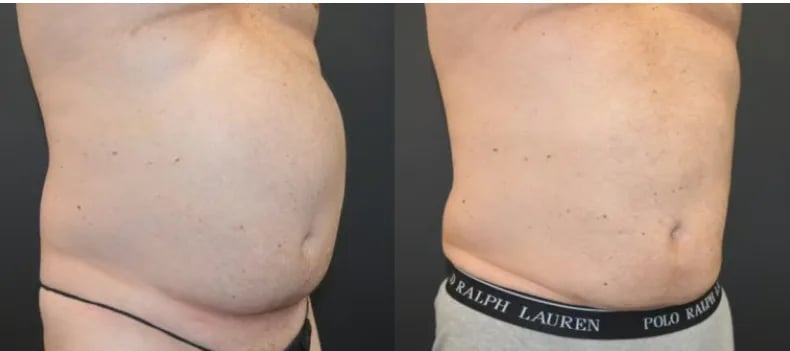
For larger areas or more significant fat volumes, adding traditional liposuction to physically remove the melted fat during the same session allows for a more substantial, immediate reduction in volume than relying on the body's natural processes alone. Dr. Kirwan evaluates each patient's specific anatomy and goals to determine whether BodyTite alone, liposuction alone, or the combined approach is most appropriate for their particular situation.
Comparing Cost Considerations
Because a combined BodyTite and liposuction procedure involves both technologies within a single session, it is generally priced differently than either treatment performed in isolation, reflecting the additional equipment, technique, and time involved in the combined approach. Patients considering this option are encouraged to discuss a specific, personalized cost estimate during their consultation, since pricing depends heavily on the number of areas treated and the extent of correction needed in each.
While the combined approach may carry a higher upfront cost than liposuction alone, patients who would otherwise need a separate skin-tightening procedure or treatment to address loose skin left behind by liposuction alone may find that the combined approach is more cost-effective overall, since it addresses both concerns within a single treatment session rather than requiring two separate interventions over time.
Who Is a Good Candidate for This Combined Approach
Good candidates for combined BodyTite and liposuction are generally in good overall health, at or near a stable weight, and dealing with a combination of unwanted fat and mild to moderate skin laxity in the treatment area, rather than either concern occurring on its own without the other. Patients with more significant skin laxity, such as substantial loose skin following major weight loss or multiple pregnancies, may still benefit from BodyTite and liposuction as part of an overall treatment plan, but may also need a more extensive surgical procedure, such as a tummy tuck or body lift, to fully address the degree of excess skin present.
Because BodyTite requires evenly distributed heating and monitoring of the skin's temperature during treatment, a physical evaluation of skin quality and thickness in the specific treatment area is an important part of determining candidacy, which Dr. Kirwan assesses directly during a consultation.
The Value of a Surgeon Who Performs Every Step Personally
One detail that distinguishes Dr. Kirwan's approach to combined BodyTite and liposuction procedures is his personal involvement throughout every stage of a patient's care. Rather than delegating portions of the procedure or follow-up care to other staff members, Dr. Kirwan is present for every consultation, performs the procedure himself, and personally follows up with patients on the evening of their treatment and in person the following day, continuing this direct involvement through all subsequent follow-up visits.
For a combined procedure like BodyTite and liposuction, where the specific technique, sequencing, and areas treated require careful individualized planning, this level of consistent, personal oversight from consultation through recovery can offer meaningful reassurance, particularly for patients evaluating a newer combined technology alongside a more familiar, established procedure like traditional liposuction.
The Role of 3D Liposculpture in the Combined Approach
Dr. Kirwan's practice also incorporates a technique referred to as 3D-SLS, or 3-D Liposculpture, an advanced liposuction method that can be layered alongside BodyTite for patients with certain skin quality considerations. This approach is particularly useful for patients with some degree of loose skin who might otherwise be more limited candidates for liposuction alone, since 3D-SLS is designed to encourage tissue retraction after fat removal, complementing the skin-tightening effect already achieved through BodyTite's radiofrequency energy.
Combining these techniques allows Dr. Kirwan to tailor a highly individualized approach based on each patient's specific skin quality, the location and volume of fat present, and the degree of tightening needed, rather than applying a single standardized technique to every patient regardless of their particular anatomy.
Combining BodyTite With Morpheus8 for Additional Skin Refinement
For patients with more pronounced skin quality concerns, including stretch marks or looser skin in the treated area, Dr. Kirwan sometimes incorporates Morpheus8 microneedling radiofrequency treatment following BodyTite and liposuction, applied to the overlying skin for further tightening and textural improvement. This layered approach, addressing fat volume, deeper skin tightening through BodyTite, and surface-level skin quality through Morpheus8, reflects a broader philosophy of combining complementary technologies rather than relying on a single treatment to address every aspect of a patient's concerns.
Patients considering this more comprehensive combination should discuss their specific skin quality concerns during their consultation, since not every patient will need or benefit from adding a microneedling component to their treatment plan.
Setting Realistic Expectations for the Combined Approach
While combining BodyTite with liposuction offers real advantages in terms of comfort and the ability to address both fat and skin laxity simultaneously, patients should understand that this combined approach is still fundamentally a body contouring treatment rather than a substitute for a more extensive surgical procedure in cases of significant excess skin. Patients with a large amount of loose, hanging skin, such as after massive weight loss, are likely to need a surgical procedure like a body lift or tummy tuck to achieve their desired result, with BodyTite and liposuction potentially playing a complementary role either before or after that more extensive surgery.
A thorough, honest consultation with Dr. Kirwan is the best way to determine which combination of treatments, surgical and non-surgical, will most effectively address a patient's specific combination of fat and skin concerns.
Frequently Asked Questions
Is BodyTite combined with liposuction painful?
Most patients report notably mild discomfort following this combined approach compared to traditional liposuction alone, often needing little more than over-the-counter pain relief such as acetaminophen, thanks to the reduced tissue trauma associated with pre-melting fat before removal.
How soon can I return to normal activities after this combined treatment?
Many patients return to normal daily activities within as little as five days, though the specific timeline depends on the extent of the areas treated and should be confirmed individually with Dr. Kirwan based on your particular treatment plan.
Will BodyTite alone tighten my skin without needing liposuction?
BodyTite does have a skin-tightening effect on its own and can be appropriate for smaller areas or more modest concerns. For larger areas or a greater volume of unwanted fat, adding traditional liposuction allows for more substantial fat removal during the same session rather than relying solely on the body's natural clearance process.
How long do results from combined BodyTite and liposuction last?
Results are generally long-lasting for the fat cells removed and the skin-tightening effect achieved, provided a patient maintains a stable weight afterward, since significant future weight gain can still affect the treated area by expanding any remaining fat cells nearby.
Can this combined approach help after previous surgery, like a tummy tuck?
Yes. BodyTite combined with liposuction is sometimes used to enhance and extend the results of a previous tummy tuck or body lift by addressing any residual fat or skin laxity in areas adjacent to the original surgical site.
Is this combined treatment appropriate for significant skin laxity from major weight loss?
Patients with more significant excess skin, such as after major weight loss, may benefit from BodyTite and liposuction as part of a broader treatment plan, but may also need a more extensive surgical procedure like a body lift to fully address the degree of skin laxity present. This is best determined through a personal evaluation with Dr. Kirwan.
What makes BodyTite different from other non-surgical body contouring devices?
Unlike purely external, non-invasive devices, BodyTite delivers radiofrequency energy internally through a small probe beneath the skin, allowing for more direct, controlled heating of both the fat layer and the deeper skin tissue than external-only treatments typically achieve, while still avoiding the need for general anesthesia or a traditional surgical incision.
Call Our Office For More Information
Share this Article
Dr. Laurence Kirwan
Dr. Laurence Kirwan, MD, FRCS, FACS, is an internationally renowned, board-certified plastic surgeon with over 30 years of experience. He trained at Manchester University and completed his Plastic Surgery residency at the University of Missouri. A Fellow of the Royal College of Surgeons and American College of Surgeons, he is a leader in aesthetic surgery, specializing in face, breast, and body procedures. Dr. Kirwan has authored multiple scientific papers and books and served as an instructor in prestigious programs. Recognized by Tatler and Russian Vogue, he practices in Connecticut, where he continues to offer personalized, top-tier care to his patients.