

07
Aug
Mommy Makeover Recovery in Norwalk: A Week-by-Week Guide
If you're considering a mommy makeover with Dr. Kirwan in Norwalk, the question that comes up in nearly every consultation isn't "will I get the results I want" - it's "what will my life actually look like for the six weeks after surgery?" That's a fair question, and it deserves a real answer, not a vague "recovery varies by patient" brush-off.
A mommy makeover typically combines two or more procedures - most commonly a tummy tuck, breast augmentation or breast lift, and sometimes liposuction of the flanks or thighs. Because you're recovering from multiple procedures simultaneously, your recovery timeline is shaped mostly by the tummy tuck component, since that's the longer and more involved healing process of the group. Here's what that actually looks like, week by week, for patients recovering in the Norwalk, Fairfield County area.

Week 1: The Hardest Stretch
The first week after a mommy makeover is the most physically demanding part of recovery, and it's worth setting expectations accordingly rather than being blindsided.
Days 1–2. You'll go home the same day or, depending on the combination of procedures, may be monitored for a few hours at Dr. Kirwan's AAAASF-accredited Norwalk surgical facility before discharge. You'll be walking - in a hunched, slightly bent position - within hours of surgery, because early movement reduces blood clot risk. This isn't optional; it's one of the more important things you can do for yourself in the first 48 hours. Expect surgical drains if your tummy tuck involved muscle repair, a compression garment around your abdomen, and a supportive bra if breast work was done. Pain is managed with a combination of prescription medication and, often, a long-acting local anesthetic placed during surgery that covers the sharpest edge of discomfort for the first day or two.
Days 3–5. This is typically when patients describe the most fatigue and tightness, particularly across the abdomen if muscle repair (diastasis recti correction) was part of your tummy tuck. Swelling peaks around days 3–4. You'll still be walking in a slightly flexed posture. Most patients are off prescription pain medication or close to it by day 5, relying on over-the-counter alternatives. Drains, if present, are checked and often removed toward the end of this window once output drops below a set threshold.
Days 6–7. Energy starts returning in small increments. You can typically shower normally (once drains are out and incisions are checked), and many patients feel comfortable with short outings - a slow walk around the block, sitting upright for longer stretches. You are still not standing fully upright yet if your tummy tuck was combined with a muscle repair; that will come gradually over the following two weeks.
Week 2: Standing Taller, Literally
By the second week, most patients notice a meaningful shift. Swelling continues to decrease, bruising (if any, more common with liposuction components) starts fading from purple to yellow-green, and posture begins to straighten. This is usually when Dr. Kirwan sees patients for a follow-up to check incisions and discuss progress.
Light household activities - folding laundry, preparing simple meals while seated or standing briefly - are usually fine. Driving is typically cleared once you're off narcotic pain medication and can comfortably engage your core to brake quickly, which for most patients lands somewhere in this window, though this is confirmed on an individual basis. Lifting restrictions remain firm: nothing heavier than a light grocery bag, and absolutely no lifting a toddler or car seat yet. This is often the hardest restriction for mothers to follow, which is worth acknowledging directly - arranging childcare help for at least the first two to three weeks isn't a luxury, it's part of protecting your surgical result.
Weeks 3–4: Returning to a More Normal Rhythm
This is typically when patients feel like themselves again, cognitively and energy-wise, even though the body is still very much healing beneath the surface. Many patients return to desk jobs around this point, sometimes slightly earlier if their role is fully sedentary and they have flexibility to stand and move periodically.
Compression garments are usually still worn most of the day during this stretch to help skin retraction and reduce swelling, though the schedule loosens compared to the first two weeks. Scar care typically begins once incisions are fully closed and cleared by the office - usually silicone sheeting or scar gel, applied consistently, makes a real difference in how incisions mature over the following months.
Exercise is still restricted to walking. No core work, no running, nothing that meaningfully engages the abdominal wall. This restriction exists specifically to protect the muscle repair if you had one - pushing this too early is one of the more common ways patients compromise their own results.
Weeks 5–6: Clearance for More
Around the five to six week mark, most patients are cleared for light cardio - a stationary bike, brisk walking, gentle elliptical use - assuming healing is on track. Core-specific exercise and any heavier resistance training usually wait until closer to eight weeks, sometimes longer, and this is very individualized based on how your muscle repair has healed. Swelling continues to resolve gradually during this period, though full settling of results - particularly around the abdomen - is a months-long process, not a weeks-long one.
Months 2–6: The Long Tail of Healing
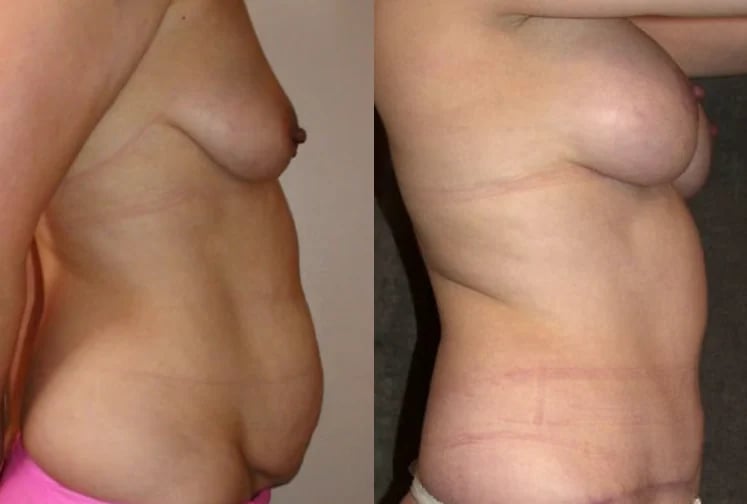
This is the part patients are least prepared for: visible, tangible improvement continues for a long time after the "recovery" period most people picture. Swelling can fluctuate day to day for several months, often worse toward the end of the day or after a salty meal. Scars go through a maturation process - typically pink to red for the first couple of months, gradually fading over 12–18 months. Breast implants or lift results settle into their final position ("drop and fluff") over a period of weeks to a few months. By the three to four month mark, most patients are seeing a result that closely resembles their long-term outcome; by six months to a year, scars have matured substantially and swelling has essentially resolved.
What Makes Recovery Easier
A few practical things consistently make a measurable difference for Norwalk-area patients:
- Arrange help in advance. Childcare and household help for the first two weeks isn't optional if you have young children at home who need to be lifted.
- Prep meals and set up a recovery station before surgery - pillows, medications, phone charger, water, all within reach without bending or reaching overhead.
- Walk early and often, in short intervals, starting the day of surgery.
- Follow garment instructions precisely. Compression isn't just for comfort; it materially affects swelling and skin retraction.
- Don't rush scar care or exercise clearance. The muscle repair in a tummy tuck needs real time to heal, and pushing early is one of the few things within your control that can affect your final result.
If you're weighing timing - before your next pregnancy, after weaning, around a work calendar - Dr. Kirwan's guidance on mommy makeover timing and his page on recovering after a C-section are worth reading before your consultation, so you can bring specific questions about your own history.
Frequently Asked Questions
How long is recovery after a mommy makeover?
Most patients return to desk work within two to three weeks and resume light exercise by five to six weeks, though full internal healing and final results continue to develop over three to six months.
When can I pick up my child after a mommy makeover?
Lifting restrictions typically last two to three weeks for anything heavier than a light bag, meaning most patients need arranged help for lifting toddlers or car seats during that window. Your surgeon will confirm timing based on your specific procedures and healing.
How long do I need to wear a compression garment?
Most patients wear compression garments continuously for the first two weeks, then for most of the day through weeks three and four, tapering off gradually as swelling resolves - often continuing part-time wear through six to eight weeks.
When can I exercise again after a mommy makeover?
Walking starts the day of surgery. Light cardio is typically cleared around five to six weeks. Core work and heavier resistance training usually wait until eight weeks or later to protect any muscle repair performed during the tummy tuck.
Will I need help at home after surgery?
Yes, particularly if you have young children. Most patients need meaningful help with childcare and household tasks for the first two weeks, tapering to lighter assistance through week four.
This article is for general informational purposes and does not replace a personalized surgical consultation. Recovery timelines vary based on the specific combination of procedures performed and individual healing. Schedule a consultation with Dr. Kirwan to discuss what your mommy makeover recovery would look like.
Call Our Office For More Information
Share this Article

Dr. Laurence Kirwan
Dr. Laurence Kirwan, MD, FRCS, FACS, is an internationally renowned, board-certified plastic surgeon with over 30 years of experience. He trained at Manchester University and completed his Plastic Surgery residency at the University of Missouri. A Fellow of the Royal College of Surgeons and American College of Surgeons, he is a leader in aesthetic surgery, specializing in face, breast, and body procedures. Dr. Kirwan has authored multiple scientific papers and books and served as an instructor in prestigious programs. Recognized by Tatler and Russian Vogue, he practices in Connecticut, where he continues to offer personalized, top-tier care to his patients.