

26
Aug
Circumferential Body Lift After Bariatric Surgery: What a Full 360-Degree Lift Actually Involves
Before We Start Walking: Why This Isn't Just "A Bigger Tummy Tuck"
If you've lost a massive amount of weight, whether through bariatric surgery, sustained lifestyle change, or a combination of both, and you're researching body contouring, you've probably encountered the term circumferential body lift and assumed it's simply a more extensive version of a standard tummy tuck. It isn't, and understanding why requires actually walking around your own body the way your surgical plan does, rather than thinking of your midsection as a single front-facing panel to be addressed and calling it done.
A circumferential body lift, sometimes called a belt lipectomy, treats the entire trunk as one continuous, connected structure, addressing excess skin and tissue in a single continuous procedure that wraps all the way around, front to side to back, rather than treating the abdomen as an isolated area and leaving the flanks and back to a separate conversation, or no conversation at all. Let's walk the actual route your surgeon plans around, region by region, so you understand exactly what's being addressed and why the sequence matters.
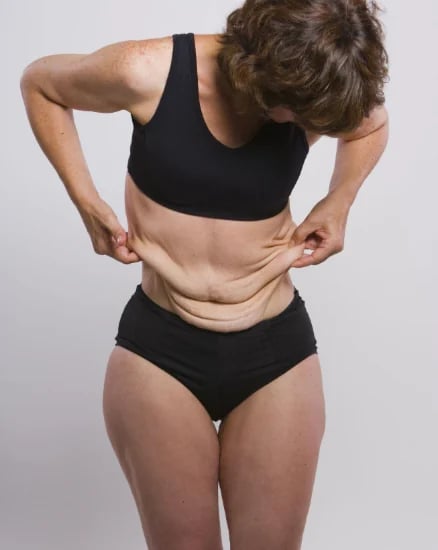
Stop One: The Front of the Abdomen
This is the region most patients already have some mental picture of, since it's what a standard tummy tuck addresses. After massive weight loss, the front of the abdomen typically presents with significant excess, often hanging, skin, sometimes extending low enough to create a pannus, a hanging apron of tissue that can extend past the pubic area and, in more significant cases, partway down the thighs. Beneath this skin, most patients who have experienced substantial weight loss also have some degree of diastasis recti, a separation of the abdominal wall muscles that occurred either during the years of carrying excess weight or, in women, compounded by pregnancy, and this muscle separation needs surgical repair as part of the procedure, not just removal of the overlying skin.
At this stop on the tour, the surgical plan involves a horizontal incision, generally positioned low enough to be concealed by most underwear and swimwear, through which excess skin is removed, the abdominal muscles are repaired and tightened, and, in most circumferential procedures, the belly button is repositioned through a new opening in the tightened skin, a technique called neoumbilicoplasty, since your original belly button remains attached to your abdominal wall throughout and needs a new surrounding opening once the skin above it has been repositioned.
Stop Two: Moving to the Flanks
Continuing the walk from the front of the abdomen around toward your sides, we reach the flanks, an area a standard tummy tuck does not extend into at all, and this is precisely where the "circumferential" part of this procedure's name starts to matter practically rather than just technically. After massive weight loss, the flanks commonly retain their own significant excess skin and tissue, sometimes described by patients as "love handles" that persisted even after the rest of their midsection improved with weight loss, and this tissue does not resolve or improve with a front-only tummy tuck, since the incision and tissue repositioning involved in a standard tummy tuck simply doesn't reach this far around the body.
At this stop, the incision from the front continues around the side, allowing the surgeon to address flank excess as part of the same continuous procedure rather than as a separate surgery addressing an isolated area. This continuity matters for the final result, since treating the front and the flanks as part of one connected incision and one connected plan for tissue removal and repositioning produces a smoother, more consistent contour around the side of the body than treating these regions as separate procedures performed independently, which can sometimes leave a visible transition or step-off where two independently planned surgical areas meet.
Stop Three: All the Way Around to the Back
Continuing the tour around your body, the incision continues from the flanks all the way around to the lower back, addressing the excess skin and tissue that collects here after massive weight loss, an area that patients often don't think about as much as the front of their abdomen simply because they can't see it as easily in a mirror, but one that's frequently just as significantly affected by the same skin laxity affecting the rest of the trunk.
This is the region that makes the procedure genuinely circumferential rather than simply an extended tummy tuck, and it's also the region requiring the most significant intraoperative repositioning, since addressing the back typically requires turning the patient during surgery, operating on the back and buttock region, then repositioning to complete the front, a more involved surgical choreography than a front-only procedure requires, and part of why total surgical time for a circumferential body lift is meaningfully longer than a standard tummy tuck alone.
Stop Four: The Buttocks, Which Often Need Their Own Specific Attention
As the tour reaches the lower back and continues toward the buttocks, it's worth stopping specifically at this region, since massive weight loss frequently causes significant volume loss and skin laxity in the buttocks specifically, sometimes producing a flattened, deflated appearance that patients find just as distressing as their abdominal concerns, if not more so. Addressing this as part of a circumferential body lift can involve using excess tissue from the areas already being removed elsewhere in the procedure, repositioned and used to add some volume and lift to the buttocks rather than being discarded entirely, an approach sometimes called an auto-augmentation technique for this specific region, using your own available tissue rather than requiring a separate procedure or implant.
This is worth discussing specifically and explicitly in your consultation if buttock volume and shape are a significant concern for you, since not every circumferential body lift surgical plan automatically incorporates this specific technique, and it needs to be planned for deliberately based on your particular anatomy and goals rather than assumed as an automatic feature of the broader procedure. This is covered in more detail on our body procedures page.
A Detour Worth Taking: What Happens to the Skin Itself During This Tour
Before completing the loop, it's worth pausing on a detail easy to overlook amid the discussion of incisions and tissue removal: the quality of the skin itself, not just its quantity, varies considerably across patients who have experienced massive weight loss, and this variation affects the final result at every stop on the tour. Patients who lost weight more gradually, or whose skin retained better elasticity due to age or genetics, often achieve a smoother, more evenly contoured final result than patients whose skin has lost significant elasticity, since skin with better remaining elasticity settles and redrapes more predictably over the newly repositioned tissue at each stop along the circumference.
This is worth understanding honestly before surgery, not as a source of anxiety but as a realistic expectation-setting detail: a circumferential body lift dramatically improves contour and removes the excess skin and tissue causing the most significant functional and aesthetic concerns, but it cannot fully replicate the skin quality of tissue that was never stretched to the same degree in the first place. Patients with more significantly compromised skin elasticity sometimes require a secondary, smaller revision procedure at some point after the initial healing period, once the skin has had time to settle and any remaining irregularities become clear, and this possibility is worth discussing directly during your initial consultation rather than treating a single surgery as an absolute guarantee of a perfectly smooth final result regardless of starting skin quality.
Completing the Loop: Why Sequence and Continuity Matter
Having walked the full circumference, front, flanks, back, and buttocks, the reason this entire route is planned and executed as one continuous procedure, rather than several separate operations addressing each region independently over time, comes into focus. A circumferential body lift is designed around achieving a single, continuous, even contour around the entire trunk, and this continuity is genuinely difficult to achieve if each region is addressed in isolation, at different times, potentially by assessing tissue tension and removal independently in a way that doesn't account for how each region's tissue relates to its neighbors around the full circumference of the body. Our candidacy checklist for body lift after weight loss page walks through this in more depth.
This is also why circumferential body lift surgery represents a considerably longer single operation than a tummy tuck alone, commonly extending to five or six hours or more depending on the extent of correction needed, and why it typically requires repositioning the patient at least once during surgery to access the back and buttock regions properly, a level of surgical complexity and duration that necessitates a thorough pre-surgical health evaluation given the extended anesthesia time involved.
What the Recovery Tour Looks Like, Stop by Stop
Recovery from a circumferential body lift follows the same full-circumference logic as the surgery itself, meaning restricted positions and activities need to account for healing incisions running all the way around your trunk, not just across the front. Most patients spend the first one to two weeks with significantly restricted mobility, generally needing to sleep in a somewhat reclined, supported position that avoids direct pressure on the back incision while also avoiding tension on the front repair, a genuinely more complex positioning challenge than recovery from a front-only tummy tuck presents. Compression garments designed specifically for circumferential procedures, wrapping the entire trunk rather than just the front, are worn for an extended period, often several weeks, to support the healing tissue around the full circumference consistently.
Given the extent of the procedure, most patients need considerably more support at home during the first two weeks than a more limited procedure would require, and planning for this level of practical support before surgery, not scrambling to arrange it afterward, is a genuinely important part of preparing for this specific procedure.
Who This Tour Is Actually Designed For
A circumferential body lift is specifically designed for patients with significant excess skin and tissue extending around the full trunk, most commonly patients who have lost a massive amount of weight, generally more than 100 pounds, through bariatric surgery or an equivalent transformation, rather than patients with more modest, front-concentrated excess for whom a standard tummy tuck alone may be entirely sufficient. Determining which category you fall into requires a thorough physical evaluation walking the same route described throughout this piece, assessing your specific degree of excess at each stop along the way, front, flanks, back, and buttocks, rather than assuming the more extensive procedure is automatically necessary simply because you've experienced significant weight loss. At Kirwan Plastic Surgery, this assessment helps determine whether the full circumferential approach is appropriate for your anatomy and goals or whether a more focused procedure may provide the result you're looking for.
For patients whose excess is genuinely concentrated at the front alone, a standard tummy tuck may achieve an excellent result with a shorter, less complex recovery. Dr. Kirwan can evaluate the distribution of your excess skin and tissue and help determine whether a standard tummy tuck, circumferential body lift, or another body-contouring approach makes the most sense for your particular anatomy and goals. Learn more about body lift surgery at Kirwan Plastic Surgery, or explore the candidacy checklist for body lift after weight loss for additional guidance on determining which approach may be appropriate.
Frequently Asked Questions
How is a circumferential body lift different from a regular tummy tuck?
A standard tummy tuck addresses only the front of the abdomen. A circumferential body lift addresses the entire trunk in one continuous procedure, including the abdomen, flanks, lower back, and often the buttocks.
How long does circumferential body lift surgery take?
This procedure commonly takes five to six hours or more, considerably longer than a standard tummy tuck, given the extent of the area addressed and the need to reposition the patient during surgery to access the back properly.

Will my buttocks be addressed as part of this procedure?
This depends on your specific surgical plan and goals. Some circumferential body lift techniques incorporate repositioning available tissue to add volume to the buttocks, but this needs to be planned deliberately based on your anatomy, not assumed automatically.
How much weight loss typically qualifies someone for this procedure rather than a standard tummy tuck?
This procedure is generally designed for patients with significant excess extending around the full trunk, most commonly following massive weight loss of 100 pounds or more, though the right procedure depends on your specific pattern of excess, not weight loss amount alone.
What does recovery involve differently compared to a standard tummy tuck?
Recovery involves managing healing incisions around the full circumference of the trunk, requiring specific positioning to avoid pressure on both front and back incisions, and typically a longer period of significant activity restriction and more extensive at-home support.
Can this procedure be combined with other body contouring surgeries?
This depends on your overall health, the extent of correction needed, and your surgeon's assessment of safe combined operating time, and is worth discussing directly during a comprehensive consultation.
Call Our Office For More Information
Share this Article

Dr. Laurence Kirwan
Dr. Laurence Kirwan, MD, FRCS, FACS, is an internationally renowned, board-certified plastic surgeon with over 30 years of experience. He trained at Manchester University and completed his Plastic Surgery residency at the University of Missouri. A Fellow of the Royal College of Surgeons and American College of Surgeons, he is a leader in aesthetic surgery, specializing in face, breast, and body procedures. Dr. Kirwan has authored multiple scientific papers and books and served as an instructor in prestigious programs. Recognized by Tatler and Russian Vogue, he practices in Connecticut, where he continues to offer personalized, top-tier care to his patients.