

28
Jul
Brazilian Butt Lift Safety: What Fairfield County Patients Should Ask Their Surgeon
The Brazilian Butt Lift has become one of the most requested body contouring procedures among Fairfield County patients, but it has also received considerable national attention for safety concerns tied specifically to how and where fat is injected during the procedure. Understanding what makes this procedure safe in experienced, appropriately trained hands, and what specific questions to ask any surgeon you are considering, is essential before moving forward.
Why BBL Safety Became a National Concern
The safety concerns associated with Brazilian Butt Lift surgery stem from a specific, well-documented risk: fat that is injected too deeply, beneath the muscle layer of the buttocks, can potentially enter large blood vessels in that area, leading to a rare but serious complication called fat embolism. This risk is directly tied to injection technique and anatomical knowledge rather than being an inherent, unavoidable risk of the procedure itself, and it is the reason major plastic surgery organizations have issued specific safety guidance regarding how this procedure should be performed.
Understanding this distinction matters enormously for patients researching their options, since the procedure's safety profile depends heavily on the specific surgeon's technique, training, and adherence to current safety protocols, rather than being a fixed risk inherent to every BBL regardless of who performs it.
The Critical Safety Distinction: Injection Depth and Technique
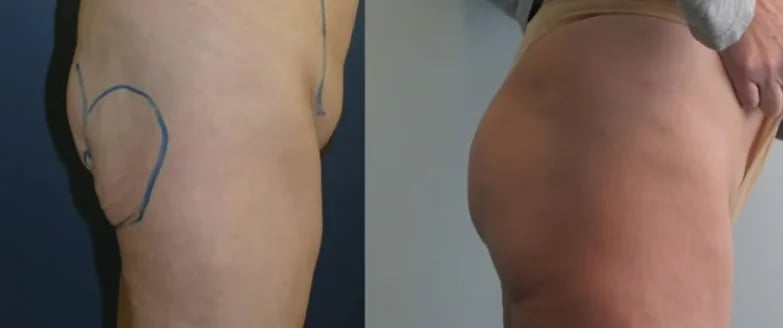
The central safety principle behind modern BBL technique is injecting fat only above the gluteal muscle, in the subcutaneous tissue layer, rather than beneath or within the muscle where the largest, most dangerous blood vessels are located. This distinction, sometimes referred to as staying in a safe anatomical plane, is now considered essential best practice, and any surgeon performing this procedure should be able to explain clearly and specifically how they ensure fat is injected only in this safer, more superficial layer.
Dr. Laurence Kirwan's approach to fat grafting during Brazilian Butt Lift procedures specifically adheres to this safer injection technique, using careful, deliberate cannula placement and technique designed to avoid the deeper muscular layer where the most serious risks are concentrated.
Question One: What Injection Technique Do You Use?
Patients evaluating a potential BBL surgeon should ask directly what specific technique is used to ensure fat is placed only in the safer subcutaneous layer. A surgeon who cannot answer this question specifically and confidently, or who seems dismissive of the question, is a red flag worth taking seriously, since this specific technical detail is directly tied to the procedure's most serious potential complication.
Question Two: Where Will My Procedure Be Performed?
The facility where a BBL is performed matters significantly for safety, since appropriately accredited surgical facilities maintain specific safety and monitoring standards. Dr. Kirwan performs BBL procedures at his own AAAASF-accredited surgical facility in Norwalk, a nationally recognized accreditation standard for outpatient surgical facilities. Patients should confirm that any facility they are considering holds comparable accreditation, rather than assuming any office-based surgical suite meets the same rigorous standards.
Question Three: How Much Fat Is Being Transferred, and Where Is It Coming From?
Understanding the source and volume of fat being used in your specific procedure is another important consultation topic. Buttock augmentation typically requires transferring 100 to 300 cubic centimeters of processed fat per side, harvested through liposuction from other areas of the body, such as the abdomen, flanks, or thighs, where a patient has excess fat available for transfer. Dr. Kirwan discusses the specific harvest sites and expected transfer volume directly with each patient during the consultation, tailoring this to the patient's own available fat stores and aesthetic goals.
Question Four: Will the Surgeon Be Personally Present and Performing the Injection Portion?
Some larger, higher-volume practices delegate portions of BBL procedures, including the fat injection itself, to less experienced staff members working under a surgeon's general supervision rather than direct, hands-on involvement. Given how directly the injection technique relates to the procedure's most serious safety risk, patients should confirm that the surgeon they are consulting with will personally perform the fat injection portion of their specific procedure. Dr. Kirwan personally performs every aspect of every procedure himself and sees every patient at every single appointment, a level of direct, consistent involvement that is a meaningful safety consideration for a procedure like BBL specifically.
Question Five: What Is Your Personal Complication Rate and Experience Level?
Patients should feel comfortable asking a prospective surgeon directly about their specific experience and safety record with Brazilian Butt Lift procedures, including how many they have performed and their approach to managing any complications that have occurred. A surgeon confident in their training, technique, and safety record should be able to discuss this openly rather than deflecting the question.
What Happens During a BBL Consultation
During a consultation, Dr. Kirwan evaluates a patient's available fat stores for harvesting, their specific buttock and body proportions, and discusses realistic expectations for the degree of enhancement achievable given their individual anatomy. He also walks patients through the specific safety protocols his practice follows, ensuring patients feel fully informed about both the procedure and the steps taken to minimize risk before deciding whether to proceed.
The BBL Procedure and Recovery
A Brazilian Butt Lift is typically performed under local anesthesia with sedation at Dr. Kirwan's Norwalk facility, combining liposuction to harvest fat from donor areas with careful, layered injection into the buttocks. Recovery involves specific restrictions on sitting directly on the buttocks for a period of time following surgery, since pressure on the newly transferred fat can affect how much of it survives long-term. Dr. Kirwan provides specific guidance on positioning, including the use of specialized cushions, and the appropriate timeline for gradually resuming normal sitting and activity.
Why Choosing the Right Surgeon Matters More Than Price
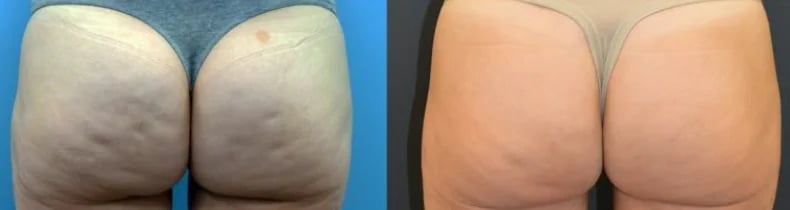
Given the specific, well-documented safety risks associated with BBL surgery when performed with improper technique, patients should prioritize a surgeon's specific safety protocols, technique, and accredited facility over simply choosing the lowest-priced option available. A lower price at a facility or with a surgeon who cannot clearly explain their specific safety approach represents a meaningfully different risk profile than a slightly higher-priced procedure performed by an experienced surgeon following current best-practice safety guidelines.
Taking the Next Step
If you are considering a Brazilian Butt Lift in Fairfield County and want a thorough safety-focused consultation with a surgeon who performs every aspect of your procedure personally, contact Dr. Kirwan's office today.
What to Expect in the Weeks Following Recovery
Beyond the initial sitting restrictions, patients should understand that BBL results continue to evolve over the following months as a portion of the transferred fat is naturally reabsorbed by the body, a normal and expected part of the fat grafting process. Dr. Kirwan accounts for this expected reabsorption when planning the total volume of fat transferred, aiming for a final, stable result that reflects the patient's goals once this initial settling period has concluded, typically over the first three to four months following surgery.
Maintaining Your Results Long-Term
Once the transferred fat has fully survived and stabilized, results are generally long-lasting, though maintaining a relatively stable body weight is important for preserving the specific proportions achieved through surgery, since significant future weight changes can affect the surviving fat volume in the treated area, just as it would affect fat anywhere else in the body.
Why the Term "Brazilian Butt Lift" Can Be Misleading
Despite its name, a Brazilian Butt Lift does not actually lift the buttocks in the way a traditional surgical lift procedure would, since it does not remove excess skin or reposition sagging tissue. Instead, it enhances shape and volume through fat transfer, which can create the visual impression of a more lifted, rounder appearance, particularly when combined with strategic liposuction of the surrounding areas to enhance the overall contour and proportion. Patients with significant skin laxity in the buttock area, rather than simply a lack of volume, may need a different procedure, such as a body lift, to address sagging skin directly, since fat transfer alone will not correct this specific concern.
Dr. Kirwan clarifies this distinction during consultations, ensuring patients understand exactly what the procedure can and cannot achieve for their specific starting anatomy, rather than assuming the name of the procedure implies a lifting mechanism it does not actually provide.
The Importance of Realistic Volume Expectations
Patients sometimes arrive at a consultation with a specific aesthetic result in mind, often influenced by images seen on social media, without accounting for how much fat is actually available for transfer given their own individual body composition. Because the fat used in a BBL must be harvested from the patient's own body through liposuction, a patient with limited donor fat available may not be able to achieve as dramatic a transformation as a patient with more donor fat to work with, regardless of the specific technique used.
Dr. Kirwan conducts a realistic evaluation of available donor fat during the consultation, providing an honest assessment of what degree of enhancement is achievable for each individual patient's specific body composition, rather than promising a result that may not be achievable given a patient's actual available fat stores.
How BBL Safety Standards Have Evolved
The specific safety concerns associated with BBL surgery, and the resulting refinement of safe injection technique, represent a genuine evolution in how this procedure is performed compared to earlier years when the procedure first gained popularity. Major plastic surgery organizations have issued specific technical guidance in recent years, informed by data collected on complications and their underlying causes, leading to a more standardized understanding across the field regarding safe injection depth and technique.
Dr. Kirwan's approach reflects this evolved understanding of safe practice, incorporating current best-practice guidance into his specific technique rather than relying on older methods that predate this more refined safety understanding.
What Happens if Complications Arise
While rare when performed with appropriate technique at an accredited facility, patients should understand what would happen in the unlikely event that a complication does arise. Dr. Kirwan's practice, given his personal, hands-on involvement in every aspect of patient care, ensures that any concerns during recovery can be addressed directly and promptly, rather than navigating a triage system involving multiple layers of staff before reaching the treating surgeon. This direct access to your surgeon throughout the recovery period is a meaningful safety consideration, particularly for a procedure where prompt recognition and management of any concern is important.
The Consultation Process for BBL Candidacy
During a BBL consultation, Dr. Kirwan evaluates a patient's overall health history, current medications, and any factors that might affect candidacy for both the liposuction and fat transfer components of the procedure. He physically assesses potential donor sites for fat harvesting, discusses realistic expectations based on available fat volume, and reviews the specific safety protocols his practice follows throughout the procedure. This thorough, individualized evaluation process is designed to ensure that patients enter surgery with a clear, accurate understanding of both what to expect and how safety is prioritized throughout their specific procedure.
Why Overall Health Status Matters for BBL Candidacy
Beyond the specific technical safety considerations discussed throughout this guide, a patient's overall health status plays an important role in BBL candidacy generally. Certain health conditions, including specific cardiovascular or clotting disorders, may affect a patient's suitability for this particular procedure, given the combination of liposuction and fat grafting involved. Dr. Kirwan's evaluation includes a thorough review of medical history to identify any factors that might affect safety, ensuring that candidacy decisions are made based on a complete picture of each patient's individual health profile rather than assuming universal candidacy for every patient who requests the procedure.
How Recovery Positioning Equipment Actually Works
Patients are often curious about the specific equipment used to protect the transferred fat during the sitting restriction period following surgery. Specialized cushions, sometimes called BBL pillows, are designed with a cutout or contoured shape that allows a patient to sit in certain positions while relieving direct pressure on the areas where fat has been transferred, redirecting pressure instead to the thighs and lower back. Dr. Kirwan's office provides specific guidance on using this equipment correctly and the appropriate timeline for gradually reducing reliance on it as healing progresses.
What Patients Should Know About Combining BBL With Other Procedures
Some patients combine BBL with additional body contouring procedures during the same surgical session, most commonly liposuction of additional areas beyond what is needed simply to harvest donor fat, allowing for more comprehensive overall body contouring within a single recovery period. Dr. Kirwan evaluates whether combining additional procedures is appropriate for each patient's specific health profile, since the total surgical time and volume of fat being processed both factor into these decisions around safely combining multiple treatment areas.
The Value of Asking About a Surgeon's Specific Training in Fat Grafting
Beyond general plastic surgery training, safe and effective fat grafting for BBL specifically requires focused experience with this particular technique, since the injection technique itself is what most directly affects both safety and the ultimate cosmetic result. Patients are encouraged to ask any prospective surgeon specifically about their training and ongoing experience with fat grafting technique, rather than assuming general plastic surgery board certification alone ensures comparable expertise with this particular, technically demanding aspect of body contouring surgery.
Final Thoughts on Making a Safe, Informed Decision
Choosing where and with whom to have a Brazilian Butt Lift performed deserves the same careful, safety-focused research as any other surgical decision, if not more, given the specific risks this procedure carries when performed incorrectly. Taking the time to ask the questions outlined throughout this guide, verifying facility accreditation, and choosing a surgeon who performs the procedure personally rather than delegating key steps to less experienced staff are all concrete, actionable steps that meaningfully reduce risk.
Frequently Asked Questions
What makes BBL surgery risky if performed incorrectly?
The primary risk relates to fat being injected too deeply, beneath the gluteal muscle, where it can potentially enter large blood vessels. Modern safe technique involves injecting fat only in the more superficial subcutaneous layer above the muscle.
How do I know if a surgeon uses safe BBL injection technique?
Ask directly what specific technique they use to avoid injecting fat beneath the muscle layer. A surgeon confident in their safety protocols should be able to explain this clearly and specifically.
Does facility accreditation matter for BBL safety?
Yes. Performing the procedure at an accredited surgical facility, which maintains specific safety and monitoring standards, is an important safety consideration worth confirming before choosing a surgeon.
Will Dr. Kirwan personally perform my entire procedure?
Yes. Dr. Kirwan personally performs every aspect of every procedure and sees each patient at every appointment, rather than delegating any portion of the procedure to other staff.
How much fat is typically needed for buttock augmentation?
Buttock augmentation typically requires transferring 100 to 300 cubic centimeters of processed fat per side, harvested from other areas of the body through liposuction.
What restrictions will I have after BBL surgery?
Patients typically need to avoid direct sitting pressure on the buttocks for a period of time following surgery to protect the transferred fat, using specialized cushions and gradually resuming normal sitting as advised.
Should I choose the least expensive BBL option available?
Price alone should not be the primary factor in choosing a BBL surgeon, given the specific safety considerations involved. Prioritizing a surgeon's technique, facility accreditation, and personal experience is more important than finding the lowest price.
Call Our Office For More Information
Share this Article

Dr. Laurence Kirwan
Dr. Laurence Kirwan, MD, FRCS, FACS, is an internationally renowned, board-certified plastic surgeon with over 30 years of experience. He trained at Manchester University and completed his Plastic Surgery residency at the University of Missouri. A Fellow of the Royal College of Surgeons and American College of Surgeons, he is a leader in aesthetic surgery, specializing in face, breast, and body procedures. Dr. Kirwan has authored multiple scientific papers and books and served as an instructor in prestigious programs. Recognized by Tatler and Russian Vogue, he practices in Connecticut, where he continues to offer personalized, top-tier care to his patients.