

23
Aug
Gynecomastia After Major Weight Loss: When It's Loose Skin, When It's True Gland, and Why the Surgery Is Different
Men who have lost significant weight, whether through lifestyle change, bariatric surgery, or a GLP-1 medication, often expect their chest to fully catch up with the rest of their transformed body, only to find that it doesn't, even months after their weight has fully stabilized. This is one of the more common and more frequently misunderstood post-weight-loss concerns, largely because the fullness patients describe can come from two genuinely different underlying causes, loose skin or true glandular tissue, and the surgery required for each is not the same.
Why "Chest Fullness After Weight Loss" Isn't One Single Problem
On physical examination, chest fullness after major weight loss generally falls into one of two categories, or sometimes a combination of both. The first is loose, redundant skin left over from the volume the chest used to carry, combined with a modest remaining layer of subcutaneous fat, without significant firm glandular tissue underneath. The second is true gynecomastia, meaning actual glandular breast tissue, a firm, rubbery disc of tissue typically felt directly beneath the nipple-areolar complex, distinct from the surrounding fat by its firmer texture.
These two presentations can look nearly identical from the outside, both producing a fuller, less masculine-looking chest, but they require entirely different surgical approaches, and neither a mirror nor a scale can reliably distinguish between them. Only a hands-on physical exam can.
When the Problem Is Skin, Not Gland
In patients whose chest fullness is driven primarily by loose skin rather than gland, a gentle pinch exam typically reveals very little firm tissue beneath the skin. Much of the fullness visibly flattens and redistributes when the patient lies flat, a sign that it's responding to gravity and position rather than sitting as a fixed mass. This pattern is common in men whose chest fullness prior to weight loss was driven predominantly by fat rather than true glandular tissue, sometimes called pseudogynecomastia to distinguish it clinically, though the distinction matters most in terms of what surgery is actually needed once significant weight loss has already occurred.
For this presentation, the surgical plan centers on skin excision, removing the redundant, stretched skin directly, sometimes combined with liposuction to address any remaining fat, rather than any significant glandular tissue removal, since there simply isn't a meaningful amount of true gland present to remove.
When the Problem Is Genuinely the Gland Itself
In true gynecomastia, the exam reveals a firm, clearly palpable disc of glandular tissue beneath the nipple, distinct from the surrounding fat. Unlike fat and skin, which respond directly to weight loss, glandular tissue in men does not reliably shrink or resolve with weight loss alone, since its growth and persistence are driven by hormonal factors, specifically the relationship between testosterone and estrogen, rather than by overall body fat percentage. This is covered in more detail on our gynecomastia surgery page.
This is a critical, frequently misunderstood point worth stating plainly: true gynecomastia commonly does not resolve with weight loss, even dramatic weight loss, even weight loss accompanied by significant improvement in overall body composition elsewhere. Many men spend months or years assuming their chest will eventually "catch up" to the rest of their transformed body, only to discover, once their weight has fully stabilized, that the glandular fullness they were hoping would resolve on its own is essentially unchanged, because it was never primarily a fat or skin problem to begin with.
For this presentation, the surgical plan requires direct surgical excision of the glandular tissue itself, performed through a small incision typically at the edge of the areola, since liposuction alone cannot adequately remove firm glandular tissue the way it removes fat. Some patients in this category also have a component of excess skin requiring attention, though generally less extensive than in patients whose primary issue is skin laxity alone.
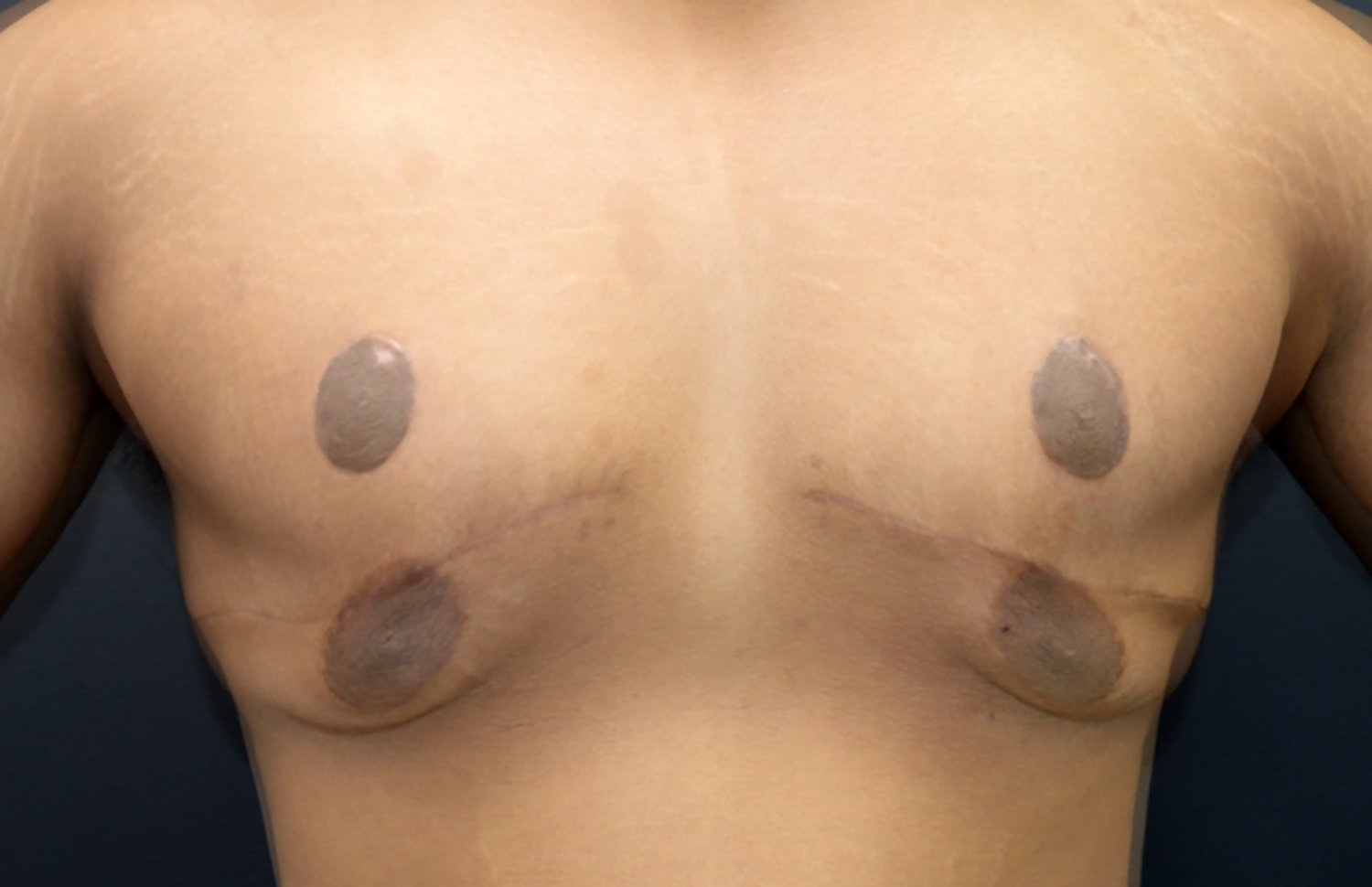
Why This Distinction Gets Missed So Often Before a Proper Exam
Most patients researching this topic assume they have leftover chest fat that hasn't fully gone away with weight loss. This is an understandable assumption, since both presentations, skin-driven fullness and glandular fullness, look broadly similar from the outside, and neither is something a patient can reliably self-diagnose through pinching or visual inspection alone. Distinguishing soft fatty tissue, firm glandular tissue, and loose, redundant skin from one another requires a trained hands-on exam, which is precisely why the surgical plan cannot be finalized without one.
Why Weight Loss Method Can Affect Which Category a Patient Falls Into
Skin's ability to retract after weight loss depends on factors including the rate of weight loss, age, genetics, and the degree of prior stretch. Some clinical observation and patient-reported experience suggests that very rapid weight loss, sometimes seen with more aggressive GLP-1 dosing or with bariatric surgery, can outpace skin's ability to retract compared to more gradual weight loss, though this varies considerably by individual and isn't a universal rule that applies predictably to every patient using these medications.
This is relevant, chest-specific information worth raising directly in consultation if your weight loss involved a GLP-1 medication, a bariatric procedure, or another approach resulting in particularly rapid change, since it may affect how much of the remaining chest fullness is realistically a skin-excess problem versus how much reflects underlying glandular tissue that was likely present before weight loss began and would not have resolved through weight loss regardless of its pace.
What Happens for Patients Who Are Genuinely a Combination of Both
Not every patient fits cleanly into one category. Many men present with some meaningful combination of both loose skin and true glandular tissue, particularly men who had a genuine gynecomastia component even before significant weight gain, compounded further by additional fat and skin changes that came with weight fluctuation over the years. For these patients, the surgical plan typically combines direct glandular excision with skin excision and liposuction as needed, addressing each specific component of the presentation rather than assuming a single surgical approach will adequately handle a genuinely mixed case.
This is, in practice, one of the more common presentations in men who have experienced both significant weight fluctuation and a lifelong tendency toward chest fullness, and it underscores why the surgical plan needs to be built around what a specific patient's chest actually contains, examined directly, rather than a generic template applied to anyone describing "man boobs after weight loss" as their chief complaint.
What Recovery Looks Like, and Why It Differs Between the Two Categories
Recovery centered around skin excision involves a more significant incision pattern and a longer period of restricted upper body activity to protect the healing skin closure, generally several weeks before returning to more strenuous activity, with scarring that, while permanent, is typically well-tolerated and fades considerably over the following year given appropriate incision placement.
Recovery centered around glandular excision through a smaller, areola-edge incision is generally somewhat less restrictive in terms of activity limitation, though swelling and some firmness in the treated area can take longer to fully resolve than patients expect, sometimes several months, as the tissue settles into its new, flatter contour. Patients undergoing combined procedures, addressing both a skin and glandular component, generally follow a recovery timeline reflecting the more extensive of the two components involved.
The Emotional Weight of This Concern Is Worth Naming
It's worth acknowledging directly that this concern carries real emotional weight beyond the physical presentation. A common and understandable source of frustration among men researching this topic is having done everything right, having put in years of consistent effort or committed fully to a medically supervised weight-loss program, only to still feel their chest hasn't caught up with the rest of their transformation. Men are often less likely than women to discuss body image concerns openly, and chest-related concerns in particular carry a specific social weight given cultural associations between chest appearance and masculinity that many find genuinely difficult to voice even in a private medical consultation.
Understanding the actual diagnosis, whether the issue is skin, gland, or both, tends to bring real relief on its own, independent of whatever surgical plan follows. Knowing that true glandular tissue was never going to resolve through further weight loss, no matter how much additional effort is applied, means a patient can stop attributing the problem to their own discipline or effort, when it was never something diet and exercise could have fixed in the first place. Dr. Kirwan's approach to gynecomastia surgery starts from this exact diagnostic distinction, not a one-size-fits-all recommendation.
What a Thorough Consultation Actually Involves
A proper evaluation includes a hands-on exam distinguishing fat, skin, and glandular tissue, a review of weight history including the rate and method of weight loss, and a specific surgical recommendation built around what's actually found on exam rather than a generic gynecomastia surgery pitch applied regardless of the underlying cause. Patients should expect a clear explanation of which category, or combination of categories, applies to their specific presentation, and why that determines the surgical approach being recommended.
Frequently Asked Questions
Will gynecomastia go away on its own if I keep losing weight?
If the fullness is caused primarily by true glandular tissue rather than fat, it generally will not resolve with weight loss alone, since glandular growth is driven by hormonal factors rather than overall body fat.
How can I tell if my chest fullness is fat, skin, or glandular tissue?
This requires a hands-on physical exam. Glandular tissue feels firm and disc-like directly beneath the nipple area, while fat and skin feel softer and can visibly redistribute when lying flat, but self-assessment is unreliable compared to a trained exam.
Does rapid weight loss from GLP-1 medications affect gynecomastia surgery differently than gradual weight loss?
It can. Very rapid weight loss may outpace skin's ability to retract, potentially leaving more residual skin excess to address surgically, though this varies considerably by individual.
Is the surgery for skin-related chest fullness different from surgery for glandular gynecomastia?
Yes. Skin-related fullness is typically addressed with skin excision and sometimes liposuction, while true glandular tissue requires direct surgical excision through an incision at the edge of the areola, since liposuction cannot adequately remove firm glandular tissue.
Can I have both loose skin and true gynecomastia at the same time?
Yes, this is a common combined presentation, particularly in men who had some degree of gynecomastia before significant weight change. Surgery in these cases addresses both components together.
How long is recovery for gynecomastia surgery after major weight loss?
This depends on which category applies to you. Skin excision generally involves several weeks of restricted activity, while glandular excision alone is often somewhat less restrictive, though full settling of the tissue can take several months either way.
Concerned about chest fullness after significant weight loss? Learn more about gynecomastia surgery at Kirwan Plastic Surgery in Norwalk, or explore our guide to body lift candidacy after weight loss for related post-weight-loss body contouring concerns.
Call Our Office For More Information
Share this Article

Dr. Laurence Kirwan
Dr. Laurence Kirwan, MD, FRCS, FACS, is an internationally renowned, board-certified plastic surgeon with over 30 years of experience. He trained at Manchester University and completed his Plastic Surgery residency at the University of Missouri. A Fellow of the Royal College of Surgeons and American College of Surgeons, he is a leader in aesthetic surgery, specializing in face, breast, and body procedures. Dr. Kirwan has authored multiple scientific papers and books and served as an instructor in prestigious programs. Recognized by Tatler and Russian Vogue, he practices in Connecticut, where he continues to offer personalized, top-tier care to his patients.