

12
Aug
Fat Transfer to the Breast vs. Breast Implants: Which Actually Looks More Natural
A Norwalk, Connecticut guide to comparing fat grafting and implant-based breast augmentation for natural-looking results.
Patients researching breast augmentation increasingly ask the same question in two different ways: some want to know how to avoid a result that looks obviously 'done,' while others simply want to understand what their realistic options are given their own body type and goals. Fat transfer breast augmentation and traditional implant-based augmentation both have a place in modern plastic surgery, but they solve different problems and produce genuinely different results. Neither is universally more 'natural' than the other; the right answer depends heavily on a patient's starting anatomy, available donor fat, and desired final size.
This guide breaks down how each technique works, who tends to be a good candidate for each, and what the honest tradeoffs are, without defaulting to the oversimplified answer that one option is simply better than the other.
How Fat Transfer Breast Augmentation Works
Fat transfer, sometimes called autologous fat grafting, involves removing fat from another area of the body, typically the abdomen, flanks, or thighs, through liposuction, processing that fat to isolate healthy fat cells, and then injecting it in careful, layered increments into the breast tissue. Because the material being used is the patient's own tissue rather than a synthetic implant, the resulting texture and movement tend to feel very similar to natural breast tissue.
The tradeoff is volume. Fat transfer typically produces a more modest increase in breast size compared to implants, generally in the range of a half cup to one full cup size per session, because only a percentage of the transferred fat cells survive long-term in their new location. Patients seeking a significant size increase, particularly those starting from a very small base, are often not ideal candidates for fat transfer alone, since there may not be enough donor fat available to achieve the desired volume in a single procedure, and multiple sessions add both cost and recovery time.
Fat transfer does come with a secondary benefit that implants cannot offer: body contouring at the donor site. Because the procedure requires liposuction to harvest the fat, patients often see a slimming effect in the areas the fat was taken from, which can be a meaningful consideration for patients who are already planning body contouring as part of a broader aesthetic goal.
How Implant-Based Augmentation Works
Traditional breast augmentation uses a silicone or saline implant, placed either above or below the chest muscle, to achieve the desired size and shape. Implants offer far more predictable and substantial volume than fat transfer, along with a wider range of achievable shapes, including more upper pole fullness for patients who want that specific look.
The main tradeoffs with implants relate to long-term maintenance and the possibility of implant-related complications. Implants are not considered lifetime devices; most surgeons discuss the likelihood of eventual replacement or revision surgery over a patient's lifetime, and patients should understand signs that an implant may need attention, including changes in shape, firmness, or symmetry. Some patients also experience a phenomenon called breast animation deformity, in which the implant visibly shifts or distorts when the chest muscle is flexed, particularly with implants placed under the muscle.
Patients weighing this option should also review realistic information about breast implant removal and alternatives, since understanding what a future removal or exchange procedure might involve is a reasonable part of initial decision-making, not just something to think about years down the line.
A Third Option: Breast Auto-Augmentation
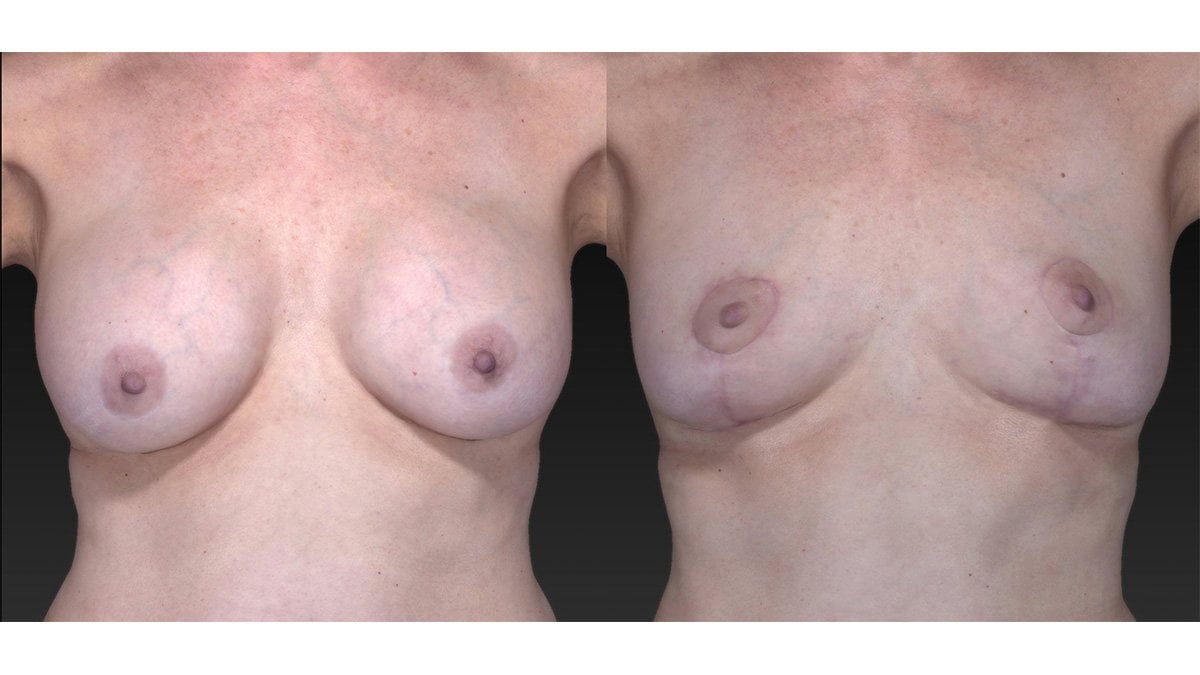
For patients who are hesitant about both foreign implants and the volume limitations of fat transfer, breast auto-augmentation offers a different approach entirely. This technique uses a patient's own breast tissue, repositioned and reshaped, to create a lifted, fuller appearance without an implant. It is generally best suited for patients who have some degree of breast ptosis (sagging) and adequate existing tissue to work with, rather than patients seeking significant size increases from a very small starting point.

Which Approach Tends to Look More Natural
The honest answer is that both fat transfer and implants can look highly natural when performed well and matched to the right candidate, and both can look unnatural when mismatched to a patient's anatomy or overdone relative to their frame. Fat transfer has an inherent advantage in texture and movement, since it is genuine breast tissue rather than a foreign material, which is why many surgeons recommend it for patients whose goal is a subtle, natural-feeling enhancement rather than a dramatic size change.
Implants, when sized appropriately for a patient's chest width and existing tissue coverage, and placed in a way that accounts for the patient's natural breast shape, can also look completely natural, particularly with moderate profile implants placed under the muscle in patients with adequate soft tissue coverage. Where implants tend to look less natural is when the size chosen significantly exceeds what the patient's chest and existing tissue can comfortably accommodate, which can create visible rippling, unnatural upper pole fullness, or a rounded shape that reads as clearly augmented.
In practice, the decision often comes down to available donor fat and desired final size more than an abstract preference for 'natural' results. A patient who wants to go from an A cup to a full C cup is not typically a candidate for fat transfer alone, regardless of how strongly they prefer the idea of using their own tissue, simply because there is rarely enough safely transferable fat to achieve that volume change in one procedure.
Some patients are candidates for a hybrid approach, using a smaller implant to establish the base volume and shape, then layering fat transfer on top to soften the upper pole transition and add coverage over the implant edges, particularly in thinner patients where implant rippling is more likely to be visible. This combination approach can achieve both meaningful size increase and the softer, more natural feel that fat grafting provides at the surface.
Whether this combination makes sense for a given patient depends on their available donor fat, their existing breast tissue thickness, and their specific aesthetic goals, which is why a detailed, individualized consultation matters more in breast augmentation planning than following a general rule about which technique is 'better.'
Dr. Kirwan has spoken about this hybrid approach as one of the more technically satisfying aspects of contemporary breast surgery, since it allows a surgeon to draw on the predictability of implant-based volume while using fat grafting to solve the specific cosmetic problems, like visible rippling or a harsh implant edge, that implants alone sometimes cannot fully address, particularly in thinner patients.
Evaluating Candidacy: Body Composition and Available Donor Fat
One of the most common misconceptions patients bring into a fat transfer consultation is the assumption that any patient can simply choose this option if they prefer the idea of using their own tissue. In reality, candidacy for fat transfer breast augmentation depends heavily on having sufficient donor fat available in areas suitable for liposuction, such as the abdomen, flanks, back, or thighs. Patients who are already quite lean, or who have previously undergone extensive liposuction in these areas, may simply not have enough transferable fat to achieve a meaningful result, regardless of how strongly they prefer this approach conceptually.
A useful way to think about this tradeoff is that fat transfer essentially redistributes existing tissue from one part of the body to another, rather than adding new volume from an external source the way an implant does. This means the total amount of change achievable through fat transfer is inherently capped by what a patient's body composition allows, which is a very different constraint than implant-based augmentation, where volume is limited primarily by chest wall anatomy and soft tissue coverage rather than the patient's overall body fat.
During consultation, a surgeon will typically assess areas of the body with adequate fat deposits, discuss how much volume is realistically extractable and transferable from those areas, and set expectations accordingly. Patients who come in hoping for a dramatic size increase through fat transfer alone, but who do not have substantial donor fat available, are often better served by an honest conversation about implants, or a combination approach, rather than attempting a fat-only procedure that is unlikely to meet their expectations.
Fat Cell Survival Rates and Why Results Can Vary
Perhaps the single most important technical concept for patients to understand about fat transfer is that not all of the fat injected during the procedure survives long-term. Transferred fat cells need to establish a new blood supply in their new location in order to remain viable, and a portion of the injected fat, generally estimated in a range that varies by surgeon technique, injection method, and individual patient biology, does not survive this process and is naturally reabsorbed by the body over the following months.
This is precisely why fat transfer results are typically assessed at a delayed timepoint, often around three to six months after the procedure, rather than immediately after surgery. The breast will generally appear larger immediately post-operatively than it will several months later, once the fat cells that did not survive have been reabsorbed and the surviving fat cells have stabilized. Surgeons account for this expected volume loss by intentionally overfilling to some degree during the initial procedure, though the exact degree of overfilling is based on clinical judgment and experience rather than a precise, universal formula.
Because of this survival variability, some patients require a second fat transfer session to reach their desired final volume, particularly if the initial survival rate was lower than anticipated or if the patient's goals call for more volume than could be safely transferred in a single session. This is a normal part of fat transfer planning for many patients rather than a sign that the first procedure failed, and it is worth discussing the possibility of a staged approach during initial consultation so it is not a surprise later.
Safety Considerations Specific to Each Technique
Both fat transfer and implant-based augmentation carry their own specific safety considerations that go beyond simple aesthetic preference. Fat transfer, because it involves both a liposuction component and an injection component, carries risks associated with each part of the procedure, including the possibility of fat necrosis, in which some transferred fat cells die and can form small calcifications or lumps in the breast tissue. These calcifications are generally benign, but they can sometimes complicate future mammography screening by creating findings that need to be distinguished from other types of breast tissue changes, which is an important consideration for patients to discuss with both their plastic surgeon and their primary care physician or gynecologist.
Implant-based augmentation carries a different set of considerations, including the possibility of capsular contracture, in which scar tissue around the implant tightens and can cause firmness, discomfort, or a distorted appearance, and the rare but medically recognized association between certain textured implant surfaces and a specific type of lymphoma, which has led most surgeons to primarily use smooth-surfaced implants in current practice. Both fat transfer and implants require ongoing monitoring over time, and patients should discuss with their surgeon what kind of follow-up imaging or self-examination routine is appropriate for their specific procedure.
Neither of these considerations should be read as a reason to avoid either procedure entirely; both are well-established, widely performed techniques with strong safety records when performed by an experienced, board-certified plastic surgeon. They are simply differences worth understanding clearly before choosing between the two approaches, since an informed decision requires weighing these tradeoffs against a patient's personal priorities and risk tolerance.
How Age and Life Stage Influence the Decision
Patient age and life stage play a meaningful role in this decision that is not always discussed openly. Younger patients who anticipate future pregnancies should understand that both breastfeeding and the natural changes of pregnancy can affect the appearance of augmented breasts, regardless of which technique was used, and this is worth factoring into timing decisions and expectations. Patients earlier in their reproductive years sometimes choose to delay any breast augmentation until after they have completed childbearing, specifically to avoid the possibility of needing a secondary procedure afterward to address changes caused by pregnancy and breastfeeding.
Patients in perimenopause or postmenopause, who often experience natural volume loss and changes in breast tissue elasticity, may find that fat transfer offers a particularly appealing option, since it can address both volume loss and, to some degree, skin quality in the treated area, in addition to the augmentation itself. This population also tends to have accumulated fat in areas suitable for donor harvesting, such as the abdomen or flanks, which can make fat transfer a more viable option than it might have been earlier in life.
There is no single right answer across age groups, but understanding how a patient's current life stage and future plans intersect with the tradeoffs of each technique is an important part of a thorough consultation, and it is worth raising these considerations directly rather than assuming a surgeon will address them unprompted.
What a Thorough Consultation Should Cover
Given how many variables factor into the fat transfer versus implant decision, patients are well served by a consultation that goes beyond a brief conversation about size preference. A thorough evaluation typically includes a physical exam of the chest wall, existing breast tissue, and skin quality, an assessment of available donor fat sites if fat transfer is being considered, a detailed discussion of the patient's goals, including how they envision their result looking in clothing and without it, and a candid conversation about the tradeoffs, risks, and realistic outcomes associated with each technique given that specific patient's anatomy.
Patients should leave a good consultation with a clear understanding of which technique, or combination of techniques, is being recommended and why, rather than a generic sense that 'implants are popular' or 'fat transfer sounds more natural.' A surgeon who takes the time to explain their specific reasoning, tailored to the individual patient's body and goals, is generally easier to trust with a procedure that will have a lasting impact on both appearance and body image.
It is also reasonable to ask to see before-and-after examples of both techniques performed by the same surgeon, ideally on patients with a similar starting anatomy to the one considering surgery. This kind of comparison, more than general information available online, tends to give patients the clearest sense of what result they can realistically expect from their own procedure.
Long-Term Maintenance Considerations for Both Techniques
Neither fat transfer nor implant-based augmentation should be thought of as a one-time decision with no future considerations. Fat transfer results, once the surviving fat cells have stabilized, generally behave like the rest of the body's fat tissue going forward, meaning significant weight fluctuations after the procedure can affect the appearance of the augmented breast in ways that would not occur with an implant, which maintains a consistent size regardless of the patient's overall weight changes.
Implants, as previously discussed, are not lifetime devices, and most surgeons discuss an expected timeline for potential future revision or replacement surgery as part of the initial consultation, even though many patients go well beyond a decade without needing intervention. Patients should think of implant-based augmentation as the beginning of an ongoing relationship with periodic monitoring, rather than a single procedure with no future touchpoints, and should plan for routine follow-up imaging as recommended by their surgeon and, in some cases, required by implant manufacturer guidelines.
Understanding these long-term maintenance realities before choosing a technique helps set expectations not just for the initial recovery period, but for the years that follow, which is ultimately a more useful framework for decision-making than focusing solely on the immediate post-operative result.
Preparing Physically and Practically for Either Procedure
Regardless of which technique a patient chooses, some preparation steps apply broadly across both fat transfer and implant-based breast augmentation. Surgeons generally recommend avoiding blood-thinning medications and supplements, including common over-the-counter options like fish oil and certain herbal supplements, for a period before surgery, since these can increase bleeding risk. Smoking cessation, ideally well in advance of the surgery date, is also strongly recommended, since nicotine use significantly impairs healing and, in the specific case of fat transfer, can meaningfully reduce fat cell survival rates due to its effects on blood flow.
Patients considering fat transfer specifically should think about the timing of their procedure relative to any planned weight loss efforts, since a stable, consistent weight in the months surrounding the procedure tends to produce more predictable results than undergoing fat transfer during a period of active weight loss, which can affect both the donor fat available and the long-term stability of the transferred fat cells.
Practical preparation also includes arranging appropriate post-operative garments, whether that means a compression garment for the donor liposuction sites in a fat transfer procedure or a supportive surgical bra for an implant procedure, and arranging for help with daily tasks during the first several days after surgery, since most patients are advised to avoid lifting anything heavier than very light objects during the initial recovery window regardless of which technique was used.
Frequently Asked Questions
How much size increase can I expect from fat transfer breast augmentation?
Most patients see an increase of about half a cup to one full cup size per session, since only a portion of the transferred fat cells survive long-term. Larger size increases generally require implants or multiple fat transfer sessions.
Does fat transfer to the breast feel different from an implant?
Fat transfer uses the patient's own tissue, so the resulting texture and movement tend to feel very similar to natural breast tissue. Implants can also feel natural when appropriately sized, though the sensation and movement differ somewhat from native tissue.
Is fat transfer or implants better for a natural look?
Both can look natural when matched correctly to the patient's anatomy and goals. Fat transfer has an inherent texture advantage, while implants offer more predictable volume for patients wanting a larger size increase.
Can fat transfer and implants be combined?
Yes. Some patients use a smaller implant for base volume and add fat transfer on top to soften the upper pole and improve coverage over the implant edges, particularly in thinner patients.
Do breast implants need to be replaced eventually?
Implants are not considered lifetime devices. Many patients will need a replacement or revision procedure at some point, and it is worth discussing this likelihood during initial consultation rather than treating it as a distant, unrelated decision.
Call Our Office For More Information
Share this Article

Dr. Laurence Kirwan
Dr. Laurence Kirwan, MD, FRCS, FACS, is an internationally renowned, board-certified plastic surgeon with over 30 years of experience. He trained at Manchester University and completed his Plastic Surgery residency at the University of Missouri. A Fellow of the Royal College of Surgeons and American College of Surgeons, he is a leader in aesthetic surgery, specializing in face, breast, and body procedures. Dr. Kirwan has authored multiple scientific papers and books and served as an instructor in prestigious programs. Recognized by Tatler and Russian Vogue, he practices in Connecticut, where he continues to offer personalized, top-tier care to his patients.