

04
Mar
Anesthesia Options for Chin Augmentation: Safety First
Facial balance often depends on details that are subtle yet powerful. A recessed chin can affect profile harmony, jawline definition, and overall facial proportion. While many people focus on features like the eyes or lips, the chin plays a foundational role in shaping how the face is perceived from every angle.
Chin augmentation offers a sophisticated solution for patients seeking improved structure, enhanced definition, and refined facial balance. Through carefully planned techniques, facial harmony surgery can create a profile that feels more proportionate and naturally aligned with surrounding features. Modern advancements in anesthesia and surgical precision allow patients to approach this transformation with confidence and reassurance.
Continue reading to understand the safety considerations, anesthesia options, and procedural insights that guide successful chin augmentation outcomes.
Understanding the Causes of a Recessed Chin
A recessed chin often develops due to structural or genetic influences that affect facial proportions.
- Genetic facial structure. Many patients inherit facial proportions that include a naturally less projected chin. Genetic traits influence bone structure, including the position of the mandible. Chin augmentation allows structural refinement that aligns with individual anatomy.
- Developmental bone growth patterns. Variations in jaw development can influence chin projection. When the lower jaw grows differently than surrounding facial structures, the chin may appear less defined. Facial harmony surgery can help restore proportional balance.
- Age-related changes in bone and tissue. Over time, bone density and soft tissue support may gradually decrease. These changes can contribute to reduced chin projection and less defined contours. Structural enhancement can support long-term facial balance.
- Dental alignment and jaw positioning. Bite alignment influences the relationship between the upper and lower jaw. Structural differences in jaw positioning may affect chin appearance. Procedures such as sliding genioplasty may be considered for functional and aesthetic improvement.
- Loss of definition along the jawline. Changes in skin elasticity and volume can affect lower facial contours. Reduced definition may make the chin appear less prominent. Chin augmentation supports improved jawline continuity.
At our practice, we offer chin augmentation as part of a refined approach to restoring facial proportion and structural harmony.
What Is Chin Augmentation?
Chin augmentation refers to procedures designed to improve projection, symmetry, and overall balance of the lower face.
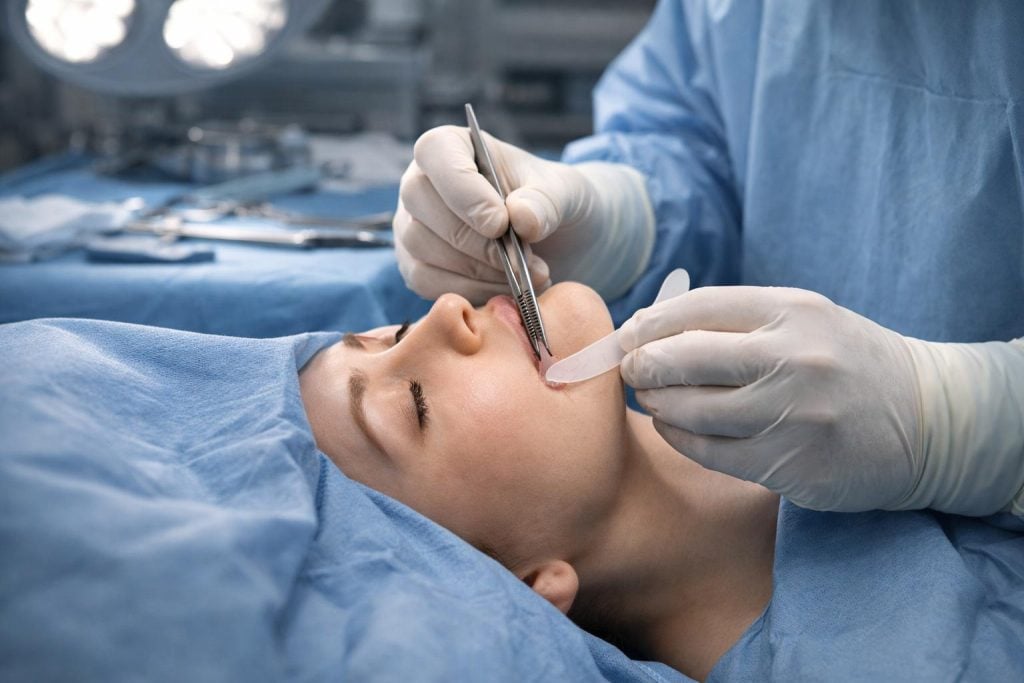
The most common approach involves placement of a solid silicone implant positioned directly against the bone. This technique allows the implant to integrate naturally into the existing facial framework, creating stable and predictable results. By placing the implant within a precisely created pocket along the bone, movement is minimized and the implant becomes a seamless extension of the patient’s natural structure.
A small incision is typically made within the crease beneath the chin, allowing discreet placement of the implant. The area is carefully prepared, and the implant is positioned according to the desired projection, width, and contour. Once ideal placement is confirmed, the incision is closed with attention to minimizing visible scarring.
Alternative options include hyaluronic acid filler treatments or fat grafting, though these may provide temporary or less predictable outcomes compared to implants. Sliding genioplasty, a procedure involving repositioning of the chin bone, may also be considered in certain cases.
Male chin augmentation often focuses on creating a broader, more angular contour, while female chin augmentation may emphasize refined projection and softer definition. Each treatment plan is customized according to individual anatomy and aesthetic goals.
Safety as the Foundation of Refinement
Every successful chin augmentation begins with careful planning and a commitment to patient safety.
Anesthesia selection plays an important role in ensuring comfort, precision, and optimal outcomes. Providers consider multiple factors when determining the most appropriate anesthesia approach, including patient health, procedural complexity, and personal preference.
Safety protocols guide every stage of treatment, from consultation through recovery.
Anesthesia Options for Chin Augmentation
Modern anesthesia techniques allow patients to experience chin augmentation comfortably while maintaining a high standard of safety.
1. Local anesthesia with sedation
Local anesthesia combined with mild sedation is commonly used for chin implant procedures. The treatment area is numbed, allowing the procedure to be performed without discomfort. Sedation helps patients remain relaxed while maintaining stable vital signs.
This approach allows faster recovery compared to general anesthesia. Patients typically feel comfortable throughout the procedure. Many providers prefer this option for straightforward chin augmentation cases.
2. General anesthesia for comprehensive procedures
In cases where chin augmentation is combined with additional procedures, general anesthesia may be recommended. This allows patients to remain fully asleep during surgery. Comprehensive procedures such as revision chin surgery or combined facial harmony surgery may benefit from this approach.
General anesthesia allows surgeons to perform more complex adjustments with precision. Continuous monitoring supports patient safety throughout the procedure. This option is often selected when multiple structural refinements are performed simultaneously.
3. Intravenous sedation for enhanced comfort
IV sedation offers an intermediate option between local and general anesthesia. Patients remain relaxed and comfortable while breathing independently. This method allows flexibility depending on procedural complexity.
Sedation levels can be adjusted throughout the procedure. Continuous monitoring allows providers to maintain optimal comfort levels. IV sedation supports both safety and patient reassurance.
4. Comprehensive preoperative evaluation
Before surgery, patients undergo medical assessment to determine anesthesia suitability. Providers review medical history, medications, and potential risk factors. Preoperative evaluation supports personalized anesthesia planning.
Understanding individual health conditions contributes to procedural safety. Personalized planning allows providers to anticipate potential considerations. Thorough evaluation supports a confident treatment experience.
5. Precise implant placement technique
Implants are positioned directly against the bone rather than within soft tissue. This approach minimizes movement and allows the implant to integrate naturally. Stability contributes to predictable and refined outcomes.
Proper positioning supports structural harmony and long-term satisfaction. Careful technique reduces the likelihood of complications. Precision reflects a commitment to excellence.
6. Sterile surgical environment
Maintaining a sterile environment reduces the risk of infection. Surgical instruments and implant materials are carefully prepared according to medical standards. Antibiotic irrigation may be used during implant placement.
Controlled environments support optimal healing conditions. Attention to detail enhances patient safety. Sterility contributes to reliable results.
7. Postoperative monitoring and care
Following surgery, patients receive guidance on chin implant recovery. Monitoring allows providers to assess healing progress and address any concerns. Postoperative care supports comfort and stability.
Swelling and mild discomfort are typically temporary. Providers offer personalized instructions for recovery support. Ongoing evaluation contributes to positive outcomes.
8. Customization of implant shape and size
A variety of implant shapes and sizes are available to achieve the desired contour. Extended implants may be used to address depressions near the jowl area. Personalized selection allows refinement that aligns with facial structure.
Male chin augmentation often benefits from square or broader implants. Female chin augmentation may emphasize refined projection. Customization contributes to balanced results.
9. Consideration of alternative techniques
Some patients may explore fat grafting or hyaluronic acid fillers as alternatives. While these options do not involve surgery, results may be temporary or require multiple treatments. Providers discuss advantages and limitations during consultation.
Sliding genioplasty may be recommended when structural repositioning is needed. Each approach supports individualized planning. Comprehensive discussion allows informed decision-making.
10. Support for revision procedures when needed
Revision chin surgery may be considered in cases where previous results require refinement. Modern techniques allow adjustments to implant position or contour. Safety protocols remain consistent across primary and revision procedures.
Revision procedures require careful planning and expertise. Structural adjustments support improved harmony. Experienced providers contribute to confident outcomes.
Chin Implant Recovery and Long-Term Results
Recovery plays an essential role in achieving refined results. Most patients experience mild swelling and temporary tightness during the initial healing phase. Chin implant recovery typically progresses steadily, with improvements becoming more noticeable over several weeks.
Providers offer guidance regarding activity modifications and follow-up appointments. Long-term results often provide stable structural enhancement that supports facial harmony.
Balancing Structure and Elegance
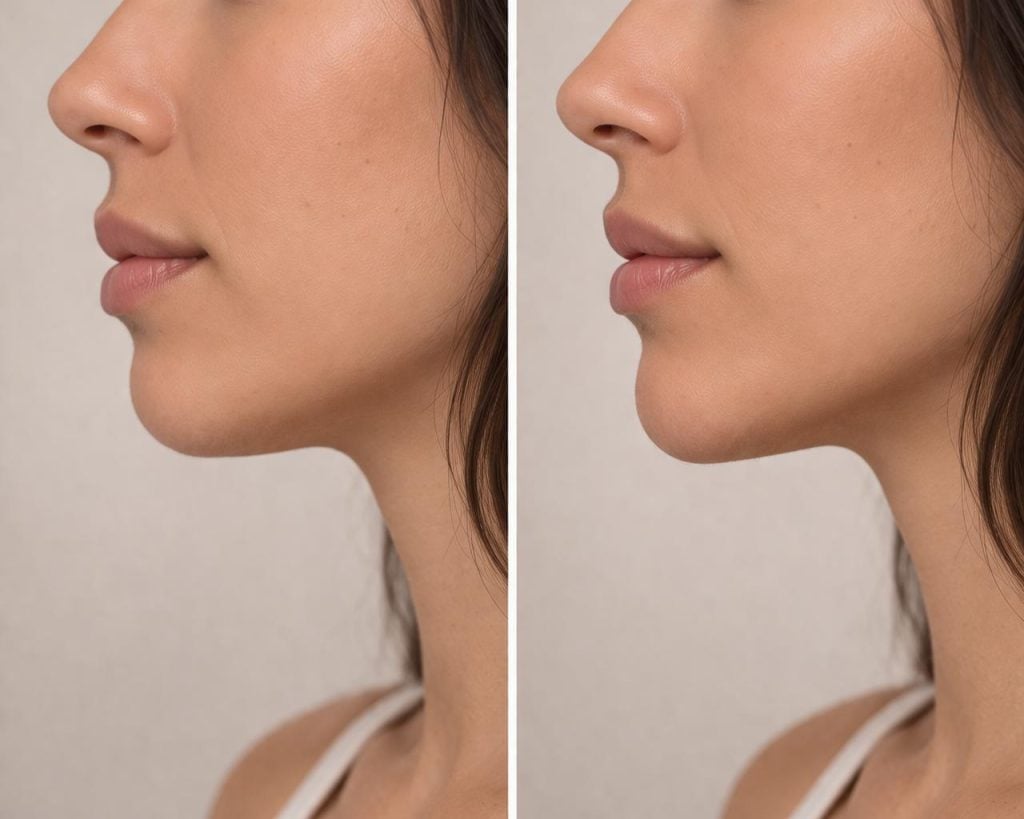
Chin augmentation reflects a broader philosophy of refinement. Rather than altering identity, facial harmony surgery enhances proportion. Subtle adjustments contribute to improved balance across the profile.
Structural refinement supports confidence that feels natural and enduring. Precision and restraint define modern aesthetic surgery.
Where Expertise Meets Aesthetic Precision
Kirwan Plastic Surgery in Norwalk, CT, approaches chin augmentation with meticulous attention to structural balance, surgical precision, and patient safety. Through personalized planning and advanced anesthesia techniques, patients receive care designed to support refined outcomes and confident recovery.
Chin augmentation represents more than enhancement. It is an opportunity to achieve harmony through thoughtful structural refinement. With the right approach, subtle adjustments create lasting elegance and balanced facial proportion.
Call us today to schedule your appointment!
Call Our Office For More Information
Share this Article

Dr. Laurence Kirwan
Dr. Laurence Kirwan, MD, FRCS, FACS, is an internationally renowned, board-certified plastic surgeon with over 30 years of experience. He trained at Manchester University and completed his Plastic Surgery residency at the University of Missouri. A Fellow of the Royal College of Surgeons and American College of Surgeons, he is a leader in aesthetic surgery, specializing in face, breast, and body procedures. Dr. Kirwan has authored multiple scientific papers and books and served as an instructor in prestigious programs. Recognized by Tatler and Russian Vogue, he practices in Connecticut, where he continues to offer personalized, top-tier care to his patients.