

23
Jul
Ethnic Rhinoplasty in Connecticut: Preserving Your Natural Features While Improving Function
Patients considering rhinoplasty in Connecticut who come from diverse ethnic backgrounds often carry a specific, well-founded concern heading into their consultation: that a standard rhinoplasty approach will erase distinctive features tied to their heritage rather than refining their nose while preserving what makes it authentically theirs. Ethnic rhinoplasty is not a single specific technique so much as a broader philosophy and approach that accounts for the different structural characteristics found across different ethnic backgrounds, ensuring that surgical goals are tailored to each patient's individual anatomy rather than applied through a single standardized template.
What Makes Ethnic Rhinoplasty Different From Standard Rhinoplasty
Nasal anatomy varies considerably across different ethnic backgrounds, including differences in skin thickness, cartilage strength and structure, the width and projection of the nasal bones, and the shape and support of the nasal tip. A surgical technique well suited to one anatomical profile is not automatically well suited to another, and applying the same standardized approach across every patient regardless of these underlying differences is a significant part of why some rhinoplasty results end up looking inconsistent with a patient's overall facial harmony and heritage.
Ethnic rhinoplasty, as a concept, refers to an individualized surgical approach that specifically accounts for these anatomical differences, whether a patient has thicker skin that behaves differently during healing than thinner skin, less rigid cartilage that requires different structural support techniques, or a nasal profile and width that reflects a specific ethnic heritage a patient wants preserved rather than altered beyond recognition.
Common Anatomical Considerations Across Different Backgrounds
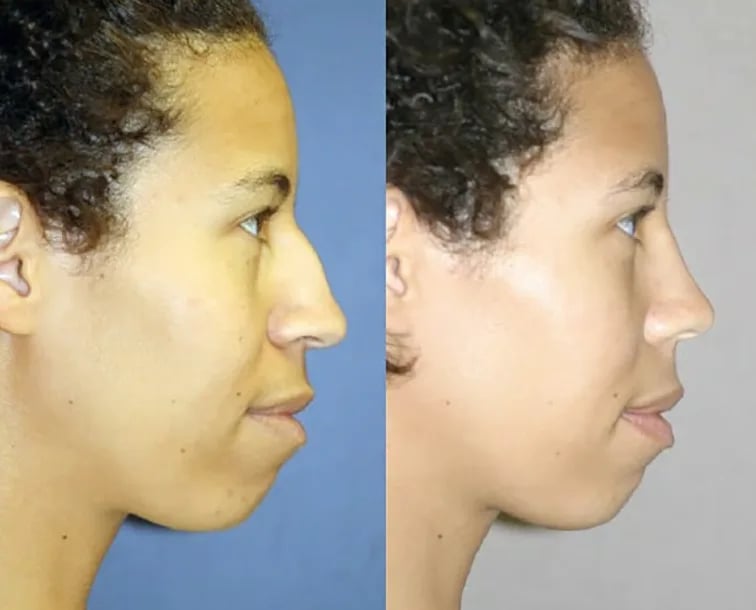
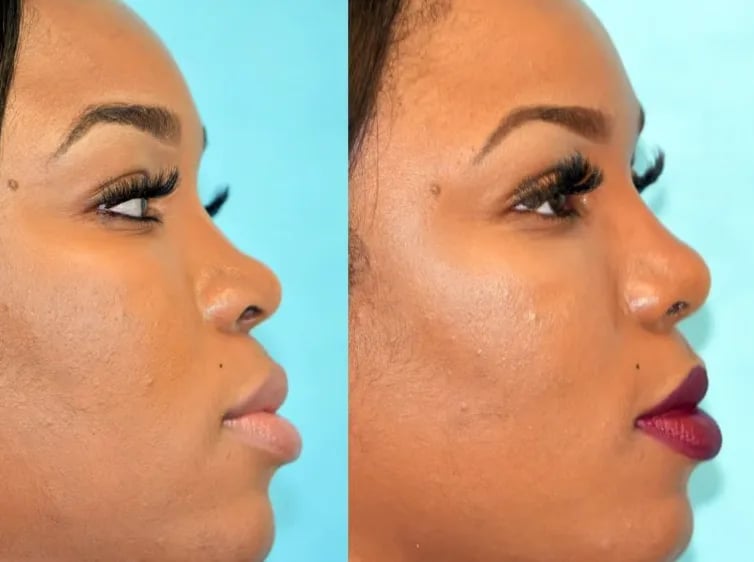
While every patient's anatomy is unique regardless of background, certain general anatomical patterns are more common within specific ethnic groups and inform how Dr. Kirwan approaches rhinoplasty planning. Patients of African descent often have thicker skin, a wider nasal base, and less rigid cartilage support at the tip, considerations that call for surgical techniques focused on building structural support through cartilage grafting rather than simply removing tissue, since removing too much structure in a nose with these characteristics can compromise both appearance and function.
Patients of Asian descent frequently have a lower, less projected nasal bridge and thicker skin at the tip, meaning that rhinoplasty goals in this population often center on building height and definition through grafting techniques rather than reduction, a fundamentally different surgical goal than the reduction-focused techniques used for patients seeking to reduce a prominent dorsal hump. Patients of Middle Eastern or Mediterranean descent often present with a more prominent dorsal hump and thicker skin at the tip, requiring careful hump reduction balanced against adequate structural support to avoid an overly narrow or pinched appearance following surgery.
Latino and Hispanic patients often have a wide range of anatomical presentations reflecting diverse ancestral backgrounds, and may have thicker skin combined with a wider tip and base, calling for a similarly individualized approach to refinement rather than aggressive narrowing that could look disproportionate to the rest of the face.
Why "One-Size-Fits-All" Techniques Fall Short
A rhinoplasty technique developed and refined primarily around thinner-skinned, more rigid cartilage anatomy, historically the dominant framework taught in many surgical training programs, does not automatically translate well to a patient with thicker skin and softer cartilage support. Applying aggressive reduction techniques to a nose with thicker skin, for example, can fail to produce the refined result a patient is hoping for, since thicker skin does not redrape as tightly over a reduced underlying structure the way thinner skin does, sometimes leaving a bulbous or poorly defined appearance despite significant tissue removal.
Similarly, applying techniques designed for reduction to a nose that actually needs structural building and support, as is often the case with lower, less-projected nasal bridges, can result in an outcome that looks unnatural or disproportionate to a patient's other facial features. This is why ethnic rhinoplasty, as an approach, is less about following a specific named technique and more about a surgeon's willingness and ability to tailor their surgical plan to the specific anatomy in front of them, rather than defaulting to techniques developed with a narrower range of anatomical presentations in mind.
Preserving Heritage While Addressing Specific Concerns
A central goal of ethnic rhinoplasty is achieving a patient's specific aesthetic and functional goals while preserving the characteristics that reflect their heritage and family resemblance, rather than pursuing a generic, narrow aesthetic ideal that erases those features. Many patients specifically want a nose that fits harmoniously with the rest of their face and reflects their background, refined in specific ways, such as improved tip definition or reduced width, without looking like an entirely different, disconnected feature from the rest of their face.
Dr. Kirwan's approach to these consultations involves a detailed conversation about which specific elements a patient wants to change and which elements they specifically want to preserve, an important distinction that shapes the entire surgical plan. This kind of individualized goal-setting is fundamentally different from a surgeon assuming every patient wants the same narrow, standardized nasal shape regardless of their starting anatomy or personal preferences.
The Functional Component of Ethnic Rhinoplasty
Just as with any rhinoplasty, functional breathing considerations are an important part of ethnic rhinoplasty planning. Certain anatomical variations, including a wider nasal base or specific differences in internal nasal valve structure, can be associated with their own functional considerations that should be evaluated alongside cosmetic goals. Dr. Kirwan's approach addresses nasal airway obstruction at the same time as cosmetic refinement whenever a patient has both concerns, since addressing the two together in a single procedure is generally more efficient and produces a more comprehensive result than treating them separately.
Patients with a crooked nose or noticeable breathing difficulty, sometimes related to a deviated septum or other structural issue, benefit from having these functional concerns evaluated and, when appropriate, corrected as part of the same surgical plan that addresses their cosmetic goals, rather than treating function and appearance as entirely separate considerations.
Techniques Used in Ethnic Rhinoplasty
Because the goals of ethnic rhinoplasty often center on building and reinforcing structure rather than purely reducing it, cartilage grafting techniques play a particularly important role. Cartilage may be harvested from within the nasal septum itself, from the ear, or in some cases from rib cartilage for more extensive structural needs, and used to build tip definition, reinforce nasal bridge height, or provide additional structural support in areas where a patient's native cartilage is not robust enough to hold a desired shape long-term on its own.
Careful attention to skin thickness is another important consideration, since thicker skin requires different expectations around final definition and a longer timeline for post-surgical swelling to fully resolve compared to thinner-skinned patients. Dr. Kirwan discusses these specific technical and timeline considerations directly with patients during their consultation, tailored to their individual anatomy, rather than presenting a generic recovery and results timeline that may not accurately reflect what a specific patient should expect.
What to Expect During an Ethnic Rhinoplasty Consultation
During a consultation, Dr. Kirwan conducts a thorough examination of nasal anatomy, including skin thickness, cartilage strength, and internal airway structure, alongside a detailed conversation about a patient's specific aesthetic goals and, importantly, which features they want to preserve. Bringing photographs of family members or reference images that reflect a preferred aesthetic direction, while understanding these are references rather than an exact template that can be perfectly replicated, can help communicate goals clearly during this conversation.
Dr. Kirwan's approach of seeing every patient personally throughout their entire treatment course, from the initial consultation through surgery and all follow-up visits, is particularly valuable in ethnic rhinoplasty planning, since achieving a result that both meets a patient's specific goals and preserves their natural heritage features requires an ongoing, individualized dialogue rather than a single standardized surgical template applied uniformly.
Recovery Considerations Specific to Ethnic Rhinoplasty
Recovery timelines can vary somewhat based on skin thickness and the specific techniques used. Patients with thicker skin generally experience a longer timeline before final results become fully apparent, since thicker tissue takes longer to redrape and settle over the underlying, often newly built structural framework compared to thinner skin. While initial swelling and bruising typically resolve within the first two to three weeks similarly to standard rhinoplasty recovery, the more subtle, final refinement of the nasal tip and overall contour can take a year or more to become fully visible in patients with thicker skin.
Setting this expectation clearly during the consultation helps patients avoid unnecessary frustration or concern in the months following surgery, when results may still be evolving even though the most obvious swelling has already resolved.
Frequently Asked Questions
Will ethnic rhinoplasty make my nose look like everyone else's?
No. The goal of ethnic rhinoplasty is the opposite: refining specific concerns while preserving the characteristics that reflect your individual heritage and facial harmony, rather than pursuing a generic, standardized nasal shape that erases those features.
Why does skin thickness matter so much in rhinoplasty planning?
Thicker skin behaves differently during healing than thinner skin, redraping less tightly over the underlying structure and taking longer to reveal final results. Surgical techniques need to account for this, sometimes requiring additional structural support through cartilage grafting to achieve adequate definition despite thicker overlying skin.
Can ethnic rhinoplasty address breathing problems as well as appearance?
Yes. Functional concerns, including a deviated septum or nasal airway obstruction, can be addressed at the same time as cosmetic goals within a single surgical plan, which is generally more efficient than addressing function and appearance in separate procedures.
How long will it take to see my final results?
Patients with thicker skin, common in some ethnic backgrounds, often see more gradual, longer-term refinement than patients with thinner skin, with final results sometimes taking a year or more to become fully apparent, even though initial swelling resolves within the first few weeks.
What if I want to build up my nasal bridge rather than reduce it?
This is a common goal for patients with a lower, less-projected nasal bridge, and it typically involves cartilage grafting techniques to build height and structure, a fundamentally different surgical approach than the reduction techniques used for patients with a prominent dorsal hump.
Should I bring reference photos to my consultation?
Reference photos, including images of family members or aesthetic goals you admire, can be a helpful starting point for discussion, though it is important to understand these serve as a general reference rather than an exact template that can be perfectly replicated on your specific anatomy.
Does Dr. Kirwan have specific experience with ethnic rhinoplasty techniques?
Dr. Kirwan's approach to every rhinoplasty consultation involves a detailed, individualized evaluation of each patient's specific anatomy, including skin thickness, cartilage structure, and functional airway considerations, tailoring his surgical technique accordingly rather than applying a single standardized approach regardless of a patient's background.
Call Our Office For More Information
Share this Article

Dr. Laurence Kirwan
Dr. Laurence Kirwan, MD, FRCS, FACS, is an internationally renowned, board-certified plastic surgeon with over 30 years of experience. He trained at Manchester University and completed his Plastic Surgery residency at the University of Missouri. A Fellow of the Royal College of Surgeons and American College of Surgeons, he is a leader in aesthetic surgery, specializing in face, breast, and body procedures. Dr. Kirwan has authored multiple scientific papers and books and served as an instructor in prestigious programs. Recognized by Tatler and Russian Vogue, he practices in Connecticut, where he continues to offer personalized, top-tier care to his patients.